Personal Finance & Wealth Management

Personal Finance & Wealth Management

Arth: Reimagining Investing for India’s Next 100 Million Users

Arth: Reimagining Investing for India’s Next 100 Million Users

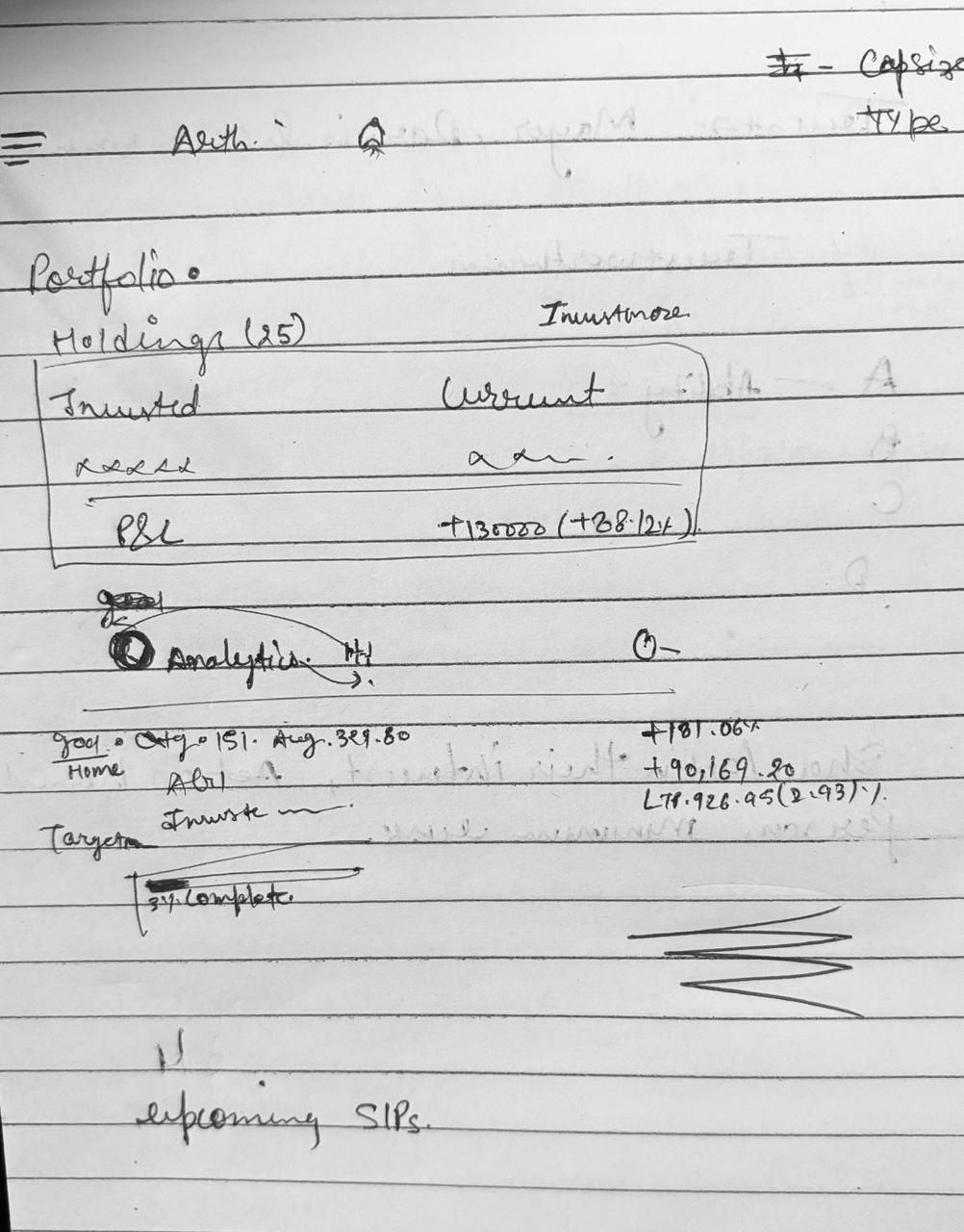
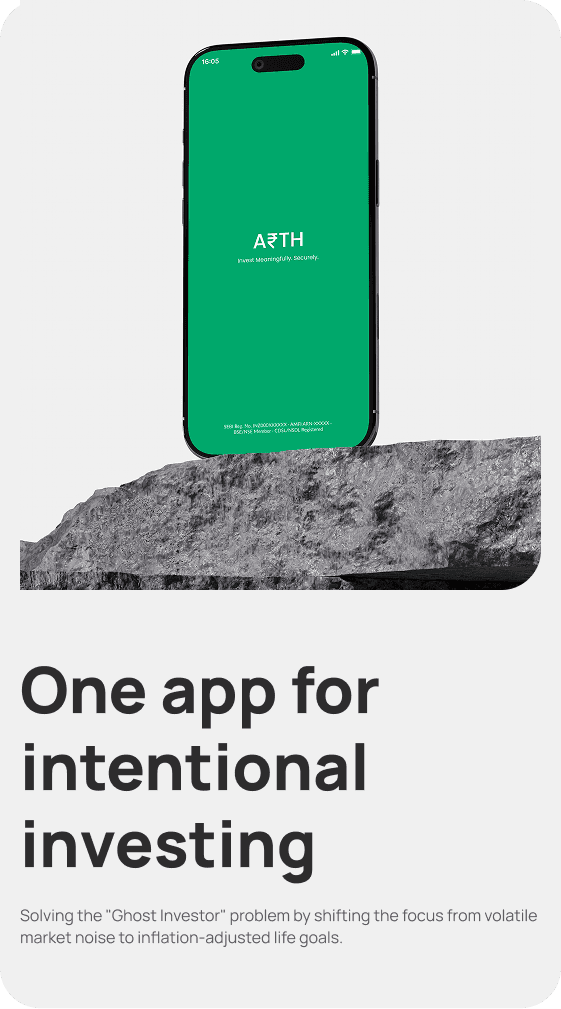
Redesigning a retail investing experience around life goals rather than portfolio returns shifting the mental model from market-watcher to goal-achiever. Designed for first-time investors in India who feel overwhelmed by traditional brokerage apps.

Redesigning a retail investing experience around life goals rather than portfolio returns shifting the mental model from market-watcher to goal-achiever. Designed for first-time investors in India who feel overwhelmed by traditional brokerage apps.

Team

Solo Product Designer(me:)

Timeline

8-week sprint

Stage

Concept 0-1

Figma Link

My role & process

Owned the design process across research, problem framing, information architecture, user flows, and final UI.

Tools, Platforms, Methodology

Figma, FigJam, Notion, Claud, Chat GPT,

Perplexity, Pintrest, UX research, Ethnographic Research,

Emerging Trends, Demographic Research, Articles, Google


Figma, FigJam, Notion, Claud, Chat GPT,

Perplexity, Pintrest, UX research, Ethnographic Research,

Emerging Trends, Demographic Research, Articles, Google

ABOUT ARTH

ABOUT ARTH

Arth is building a simpler way for India’s new investors to start, learn, and grow their money.

With guided flows, clear insights, and simplified decisions, Arth turns confusion into confident action
PROBLEM

Investing apps overwhelm passive retail investors with real-time, engagement-driven data they can't act on causing anxiety, confusion, and early churn.

The User Problem:

Financial Anxiety & Aimless

Investing

  • Decision Paralysis: With thousands of Mutual Funds available, users don't know where to start, leading to "analysis paralysis.


  • Emotional Volatility: Without a clear "Why," users panic during market dips. They view their money as a fluctuating number rather than a future milestone.


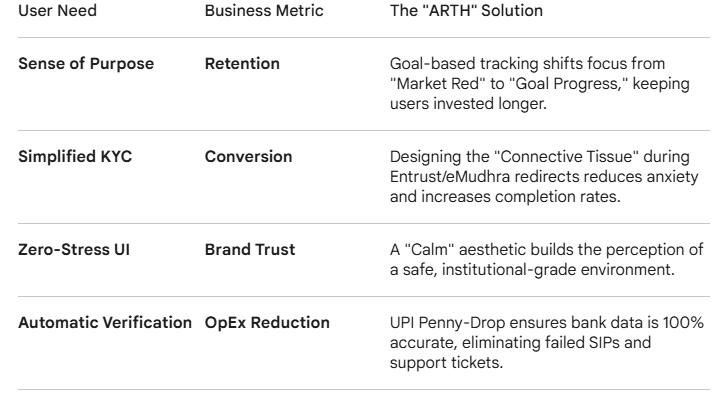
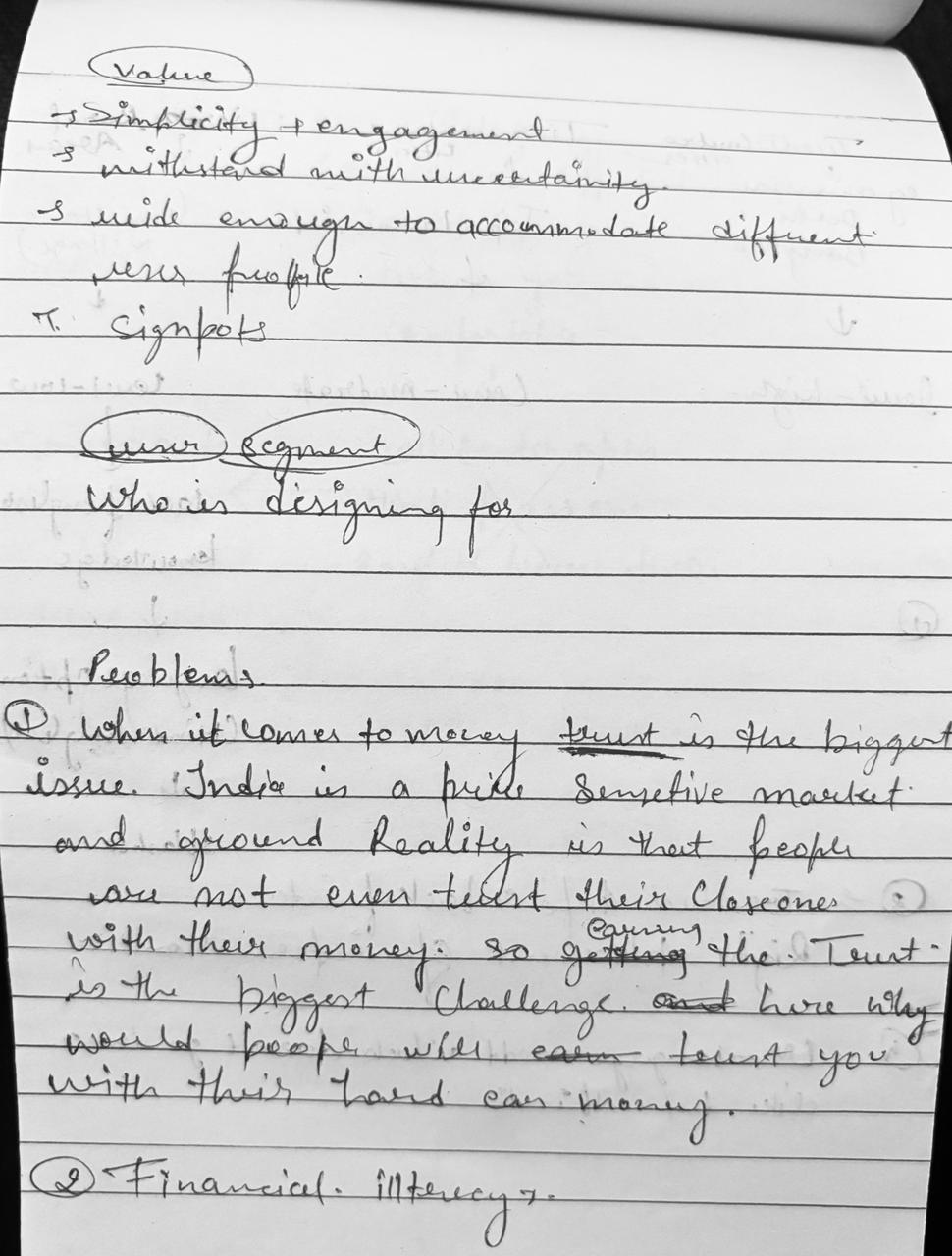
  • Trust Deficit: The technical friction of KYC and e-signing (Aadhaar redirects) creates "security anxiety," making users feel they are losing control of their data.


  • The Emotional Brief: "I have money, but I don't have a plan, and the process of setting one up feels stressful and unsafe."

The Business Problem:

High Churn & Low Conversion

  • From a business perspective, the most expensive problems are users who leave before they invest and users who stop their SIPs.


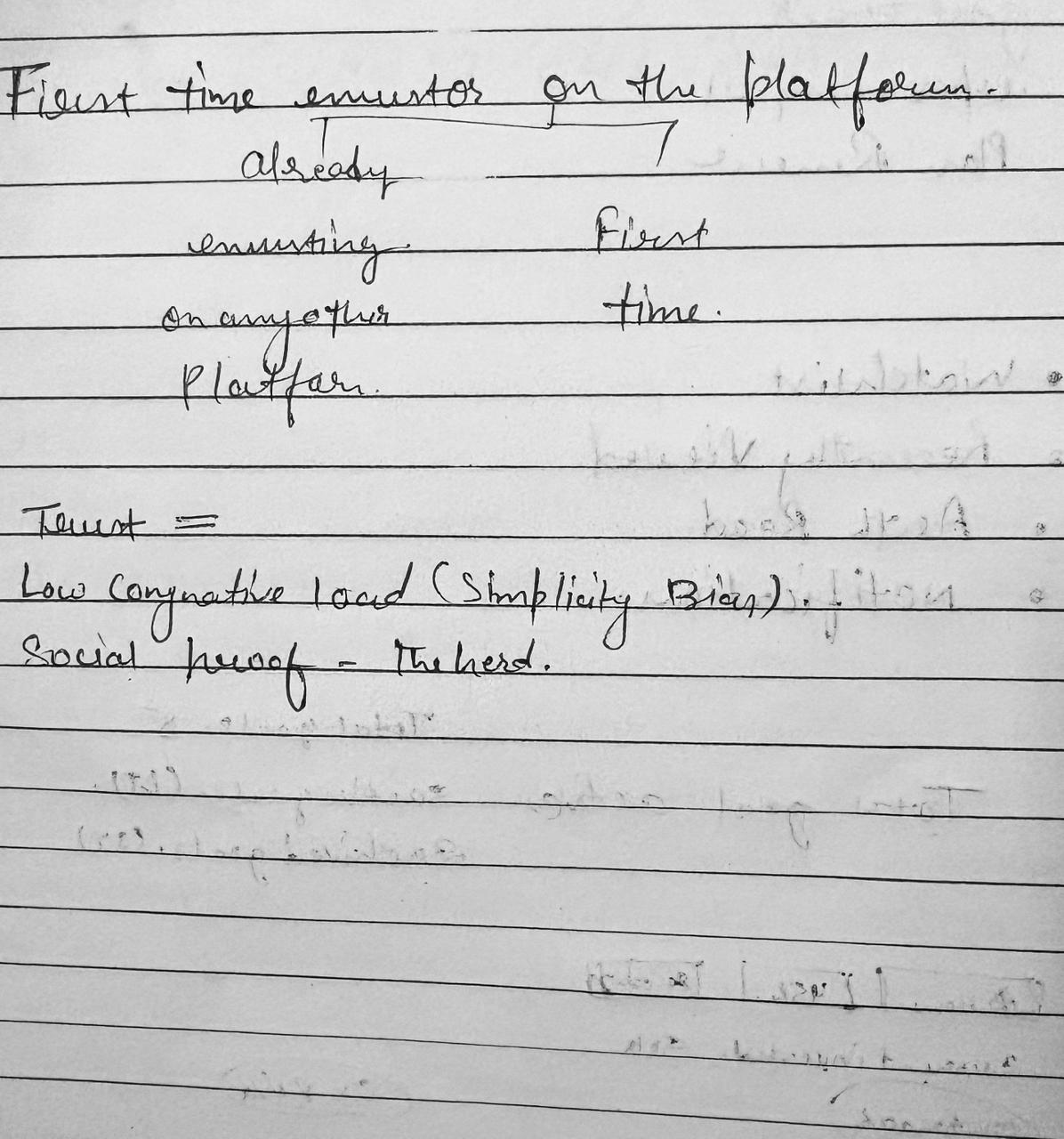
  • Onboarding Drop-off: Every time a user is redirected for an eSign (via eMudhra) or identity check (via Entrust), the business loses a percentage of potential revenue to "redirection friction.


  • Low Lifetime Value (LTV): If a user doesn't anchor their investment to a goal, they are likely to withdraw their money at the first sign of a market correction, ending the revenue stream for the platform.


  • Operational Overhead: Manual errors in bank linking or KYC lead to failed mandates, which require expensive manual support and technical intervention.

Design hypotheses

  • If the home screen leads with goals, users will feel progress rather than anxiety


  • Onboarding that leads with "what are you saving for?" will improve activation rate


  • Milestone celebrations tied to real goals increase positive app open rate


  • Translating allocation into goal-specific language reduces confusion and drop-off


  • If the home screen leads with goals, users will feel progress rather than anxiety


  • Onboarding that leads with "what are you saving for?" will improve activation rate


  • Milestone celebrations tied to real goals increase positive app open rate


  • Translating allocation into goal-specific language reduces confusion and drop-off


SOLUTION

What ARTH Is Not Trying to Solve

What ARTH Is Not Trying to Solve

Out of Scope

Out of Scope

Why

Why

Speculative / day trading

Speculative / day trading

Contradicts the goal-based philosophy

Contradicts the goal-based philosophy

Direct stock selection

Direct stock selection

Increases complexity for first-time investors

Increases complexity for first-time investors

Cryptocurrency

Cryptocurrency

Volatile, largely unregulated in India

Volatile, largely unregulated in India

Derivatives / F&O

Derivatives / F&O

Unsuitable for retail, goal-driven audience

Unsuitable for retail, goal-driven audience

Corporate / institutional investing

Corporate / institutional investing

ARTH focuses on individuals and households

ARTH focuses on individuals and households

Tax filing / accounting

Tax filing / accounting

Separate product category entirely

Separate product category entirely

ARTH is not a trading app, a financial advisory firm, or a wealth manager. It's a goal-first investing companion.

RESEARCH AND FRAMING

RESEARCH AND FRAMING

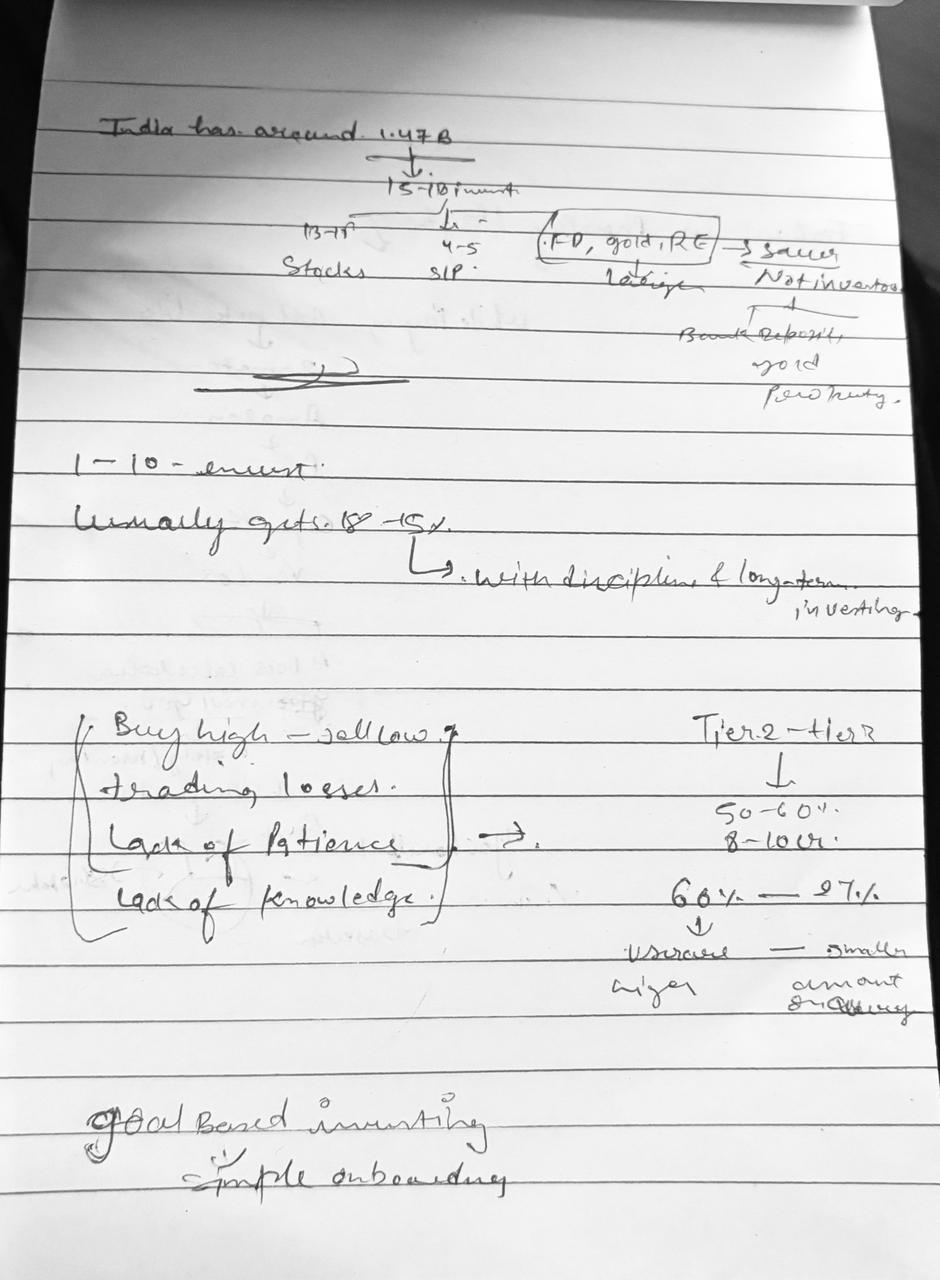
I did 8 moderated user interviews across three segments: anxious beginners (25–35, first investing app my collogues), lapsed investors (30–45, tried and stopped my brothers), and "set and forget" users (My girl friends) who auto-contributed but never opened the app, read Reddit Threads, app store reviews. Alongside this, I did a competitive audit of 6 apps to understand how people naturally categories financial goals.

"I know I'm supposed to invest for retirement but it feels so far away. When the market goes down I just close the app I don't know if I should do something or ignore it."


~Gaurav(Brother)

I opened Zerodha, saw all those numbers, and just closed it. I don't know what any of it means. I just want to go to Europe in two years — tell me what to do.

~Avantika(Friend)

USER PERSONAS

USER PERSONAS

woman in black blazer using MacBook

Priya Rathod

Marketing executive · Jaipur · Age 27

  • Aspiring investor

  • Goal Driven


About:

Earns ₹55,000/month. Lives with parents, has low fixed expenses. Has a PPF account her father set up but has never invested independently. Dreams of a Europe trip in 2 years and buying a car by 30.


"I know I should invest but every time I open an app I feel stupid. Just tell me what to do for my goal."


Profile:

Income: ₹55k/month

Investable surplus: ₹15k–18k/month

Current investment: PPF (inherited), no SIPs

Tech comfort High: daily app user

Finance knowledge Low: aware but unsure


Goals

  • Europe trip — ₹2.5L in 24 months

  • Down payment for a car — ₹1L in 3 years

  • Feel "financially responsible" in front of family

Frustrations with existing apps

  • Too many fund options with no guidance on which fits her timeline

  • Scary language "NAV," "exit load," "expense ratio" not explained

  • No connection between what she invests and what she actually wants

Marketing executive · Jaipur · Age 27

  • Aspiring investor

  • Goal Driven


About:

Earns ₹55,000/month. Lives with parents, has low fixed expenses. Has a PPF account her father set up but has never invested independently. Dreams of a Europe trip in 2 years and buying a car by 30.


"I know I should invest but every time I open an app I feel stupid. Just tell me what to do for my goal."


Profile:

Income: ₹55k/month

Investable surplus: ₹15k–18k/month

Current investment: PPF (inherited), no SIPs

Tech comfort High: daily app user

Finance knowledge Low: aware but unsure


Goals

  • Europe trip — ₹2.5L in 24 months

  • Down payment for a car — ₹1L in 3 years

  • Feel "financially responsible" in front of family

Frustrations with existing apps

  • Too many fund options with no guidance on which fits her timeline

  • Scary language "NAV," "exit load," "expense ratio" not explained

  • No connection between what she invests and what she actually wants

man in black zip up jacket

Arjun Khanna

Software engineer · Bengaluru · Age 31

  • Anxious optimizer

  • Over-thinker


About:

Earns ₹1.2L/month. Has been investing in mutual funds for 2 years but spread across 11 funds with no clear strategy. Spends 30 mins/week reading financial Twitter. Anxious about market corrections.


"I have money invested but I have no idea if I'm on track for anything. It's like I'm running but I don't know where the finish line is"


Profile:

Income ₹1.2L/month

Investable surplus ₹35k–40k/month

Current investment : None

Tech comfort High — High

Finance knowledge Low : Medium ,informed but lost


Goals


  • Home down payment — ₹25L in 5 years

  • MBA abroad — ₹30L in 4 years

  • Clarity — wants to know if he's "doing it right"

Frustrations with existing apps

  • 11 funds, no view of whether they collectively serve any goal

  • Checking returns daily creates anxiety, not confidence

  • No one to tell him: "you're fine, keep going" or "adjust this"

Software engineer · Bengaluru · Age 31

  • Anxious optimizer

  • Over-thinker


About:

Earns ₹1.2L/month. Has been investing in mutual funds for 2 years but spread across 11 funds with no clear strategy. Spends 30 mins/week reading financial Twitter. Anxious about market corrections.


"I have money invested but I have no idea if I'm on track for anything. It's like I'm running but I don't know where the finish line is"


Profile:

Income ₹1.2L/month

Investable surplus ₹35k–40k/month

Current investment : None

Tech comfort High — High

Finance knowledge Low : Medium ,informed but lost


Goals


  • Home down payment — ₹25L in 5 years

  • MBA abroad — ₹30L in 4 years

  • Clarity — wants to know if he's "doing it right"

Frustrations with existing apps

  • 11 funds, no view of whether they collectively serve any goal

  • Checking returns daily creates anxiety, not confidence

  • No one to tell him: "you're fine, keep going" or "adjust this"

COMPITITOR ANALYSIS

COMPITITOR ANALYSIS

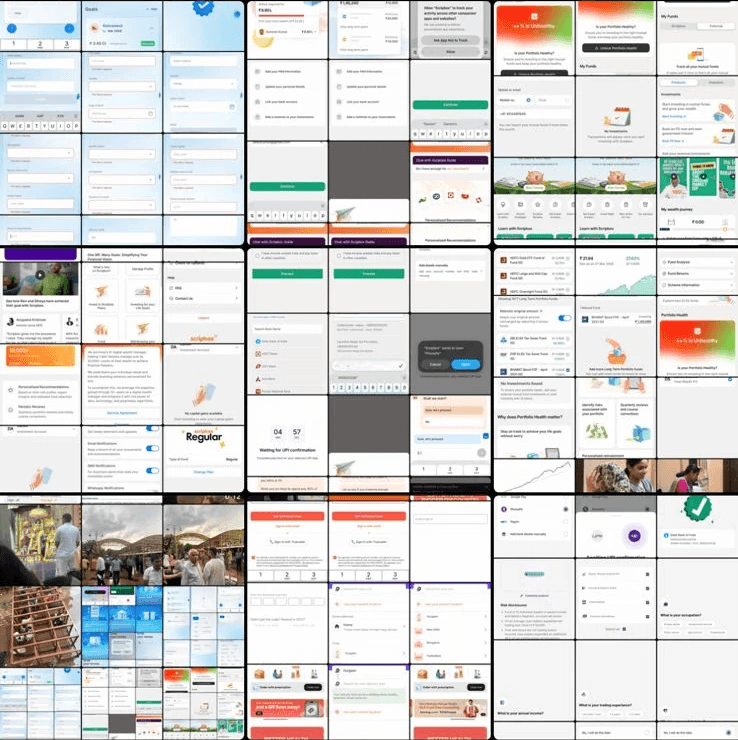
One major issue across all these apps is that they allow screenshots even on highly sensitive screens like Portfolio and KYC. and dark patterns are not completely banned.
Paytm Money

Things to consider

  • Simple onboarding and beginner-friendly experience

  • Low-cost investing with multiple options (stocks, MF, IPO, etc.)

  • Clean UI and easy navigation

  • Strong ecosystem integration (Paytm users)

  • Good for passive investors

Areas of improvement (Opportunity)

  • Product-first, not goal-first

  • Limited guidance → “what should I do next?”

  • Weak habit-building system

Paytm Money

Things to consider

  • Simple onboarding and beginner-friendly experience

  • Low-cost investing with multiple options (stocks, MF, IPO, etc.)

  • Clean UI and easy navigation

  • Strong ecosystem integration (Paytm users)

  • Good for passive investors

Areas of improvement (Opportunity)

  • Product-first, not goal-first

  • Limited guidance → “what should I do next?”

  • Weak habit-building system

Groww

Things to consider

  • Extremely simple and intuitive UI

  • Easy onboarding → great for beginners

  • Wide range of investment options

  • Strong brand trust among young users

  • Fast and smooth experience

Areas of improvement (Opportunity)

  • No strong recommendations or guidance

  • Limited research & insights

  • Becoming feature-heavy over time (losing focus)

  • No habit-building or behavioral nudges

  • Doesn’t connect investments with goals

Groww

Things to consider

  • Extremely simple and intuitive UI

  • Easy onboarding → great for beginners

  • Wide range of investment options

  • Strong brand trust among young users

  • Fast and smooth experience

Areas of improvement (Opportunity)

  • No strong recommendations or guidance

  • Limited research & insights

  • Becoming feature-heavy over time (losing focus)

  • No habit-building or behavioral nudges

  • Doesn’t connect investments with goals

Zerodha

  • Powerful platform with advanced tools

  • Low brokerage and strong trust

  • Educational resources (Varsity)

  • Best for experienced users/traders

  • High reliability and performance

Areas of improvement (Opportunity)

  • Complex for beginners

  • Not intuitive for first-time investors

  • Focus on trading > long-term investing

  • No guided journey or goal-based system

  • Limited emotional or behavioral support

Zerodha

  • Powerful platform with advanced tools

  • Low brokerage and strong trust

  • Educational resources (Varsity)

  • Best for experienced users/traders

  • High reliability and performance

Areas of improvement (Opportunity)

  • Complex for beginners

  • Not intuitive for first-time investors

  • Focus on trading > long-term investing

  • No guided journey or goal-based system

  • Limited emotional or behavioral support

Scripbox

  • Strong goal-based investing approach

  • Personalized portfolio recommendations

  • Reduced decision-making for users

  • Focus on long-term investing

Areas of improvement (Opportunity)

  • Less engaging UX (low motivation/feedback loops)

  • Not strong in habit-building

Scripbox

  • Strong goal-based investing approach

  • Personalized portfolio recommendations

  • Reduced decision-making for users

  • Focus on long-term investing

Areas of improvement (Opportunity)

  • Less engaging UX (low motivation/feedback loops)

  • Not strong in habit-building

Upstox

  • Low-cost brokerage model → affordable for active traders

  • Powerful trading tools & charts (TradingView, ChartIQ) → strong for advanced users

  • Wide investment options → stocks, IPOs, mutual funds, commodities

  • Fast execution & real-time data → good for active trading

  • Feature-rich platform → basket orders, smart lists, strategy tools

  • Educational resources (UpLearn) → helps users learn basics

  • Strong credibility (SEBI registered, backed by known investors)

Areas of improvement (Opportunity)

  • Not beginner-first → learning curve due to too many features

  • No personalized guidance or advisory

  • Limited research insights and recommendations

  • Weak goal-based investing approach

  • No strong habit-building system (nudges, consistency loops)

  • Focused more on trading than long-term investing behavior

  • Occasional technical issues during peak time

  • Clutter UI

Upstox

  • Low-cost brokerage model → affordable for active traders

  • Powerful trading tools & charts (TradingView, ChartIQ) → strong for advanced users

  • Wide investment options → stocks, IPOs, mutual funds, commodities

  • Fast execution & real-time data → good for active trading

  • Feature-rich platform → basket orders, smart lists, strategy tools

  • Educational resources (UpLearn) → helps users learn basics

  • Strong credibility (SEBI registered, backed by known investors)

Areas of improvement (Opportunity)

  • Not beginner-first → learning curve due to too many features

  • No personalized guidance or advisory

  • Limited research insights and recommendations

  • Weak goal-based investing approach

  • No strong habit-building system (nudges, consistency loops)

  • Focused more on trading than long-term investing behavior

  • Occasional technical issues during peak time

  • Customer support delays → impacts trust

Three tensions that shape the design

Tension 1 · Aspiration vs anxiety

Users are excited about goals (Europe trip, home, MBA) but scared of losing money. The interface must anchor every decision to the goal, not to market risk.

Tension 2 · Simplicity vs trust

Users want "just tell me what to do" but also need to feel the recommendation is legitimate. Showing reasoning (even lightly) builds confidence without overwhelming.

Tension 3 · Automation vs control

Auto-invest SIPs reduce friction but feel scary. Users want the option to pause, not the obligation to stay. Agency = comfort.
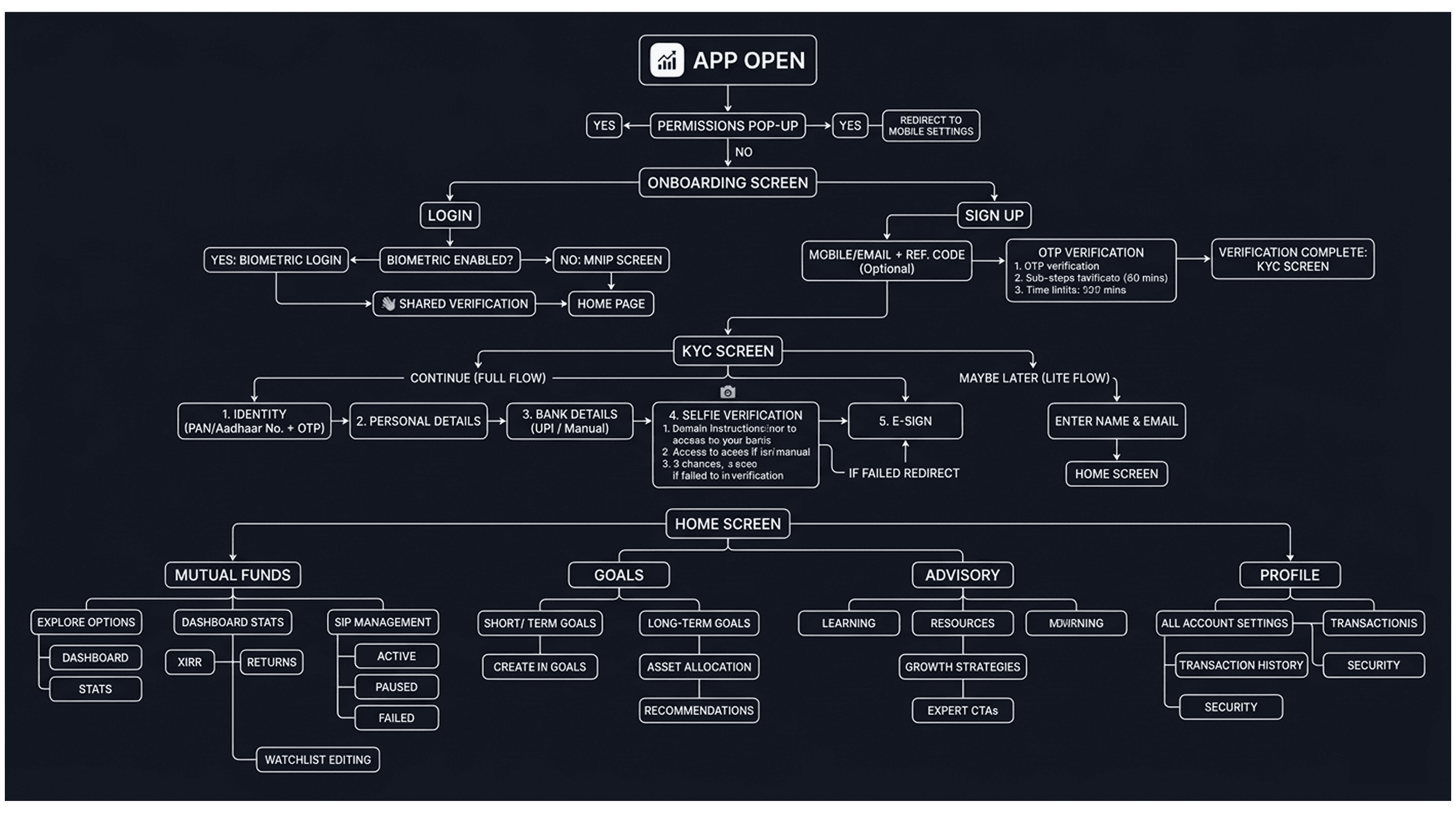
INFORMATION
ARCHITECT

Information

Architecture

InformationArchitecture


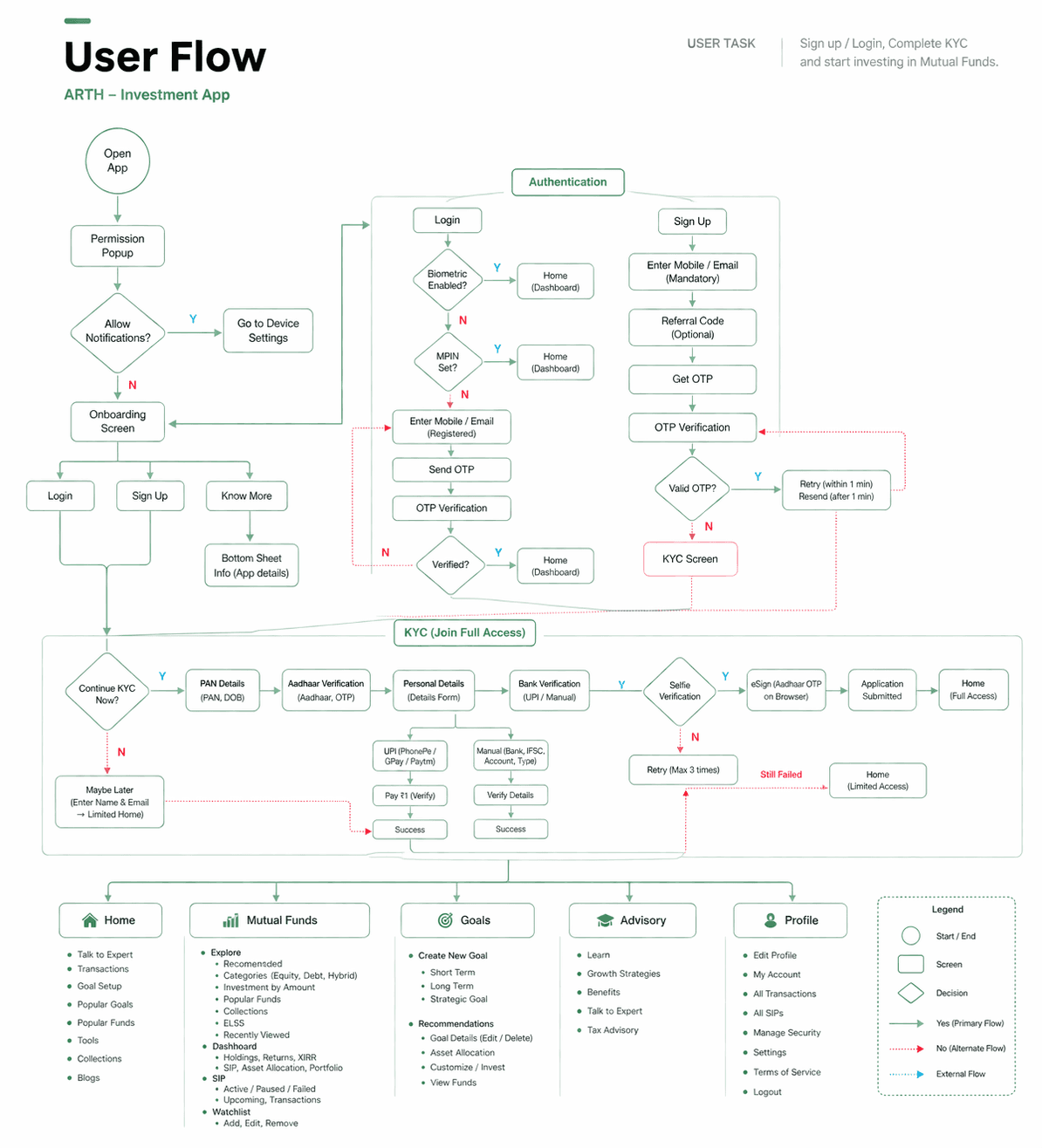
USER FLOW

USER FLOW

Trade-offs made

  1. Users want to explore all 2,000+ funds, but beginners get overwhelmed. I restricted the "Browse" experience in favor of a guided flow. I traded "User Autonomy" (freedom to buy anything) for "Curation" (suggesting only 3–5 funds based on their goal). To eliminate Analysis Paralysis. By narrowing the funnel, I increase the likelihood of the user actually completing their first investment.

  1. Me as a designer usually want "instant" actions. But in finance, instant can feel "cheap" or "unsecured." I intentionally added friction to the transaction flow. I traded "Efficiency" (one-click buying) for "Confidence."

  1. Rejected Bloomberg Principle; used Goal-based cards to reduces cognitive load for first-time investors.

  1. Muted the red/green volatility on the main home screen to promote Promotes long-term holding over impulsive trading.

Key design decisions

Core flow reversal

Goal → Plan → Fund

Not fund → portfolio → return

Primary interaction

Goal card

Not fund → portfolio → return

Success metric

% goals on track

Not portfolio return

  • Avoid Bloomberg principle
    Since t5his app is for beginners, I decided to avoid the Bloomberg Principle. For someone just starting out, high data density isn't helpful it's intimidating. A beginner's biggest hurdle isn't a lack of information; it's analysis paralysis (being so overwhelmed by data that they do nothing). High data density causes Cognitive Load. A first-time investor will feel overwhelmed and close the app if they see 50 flashing numbers.

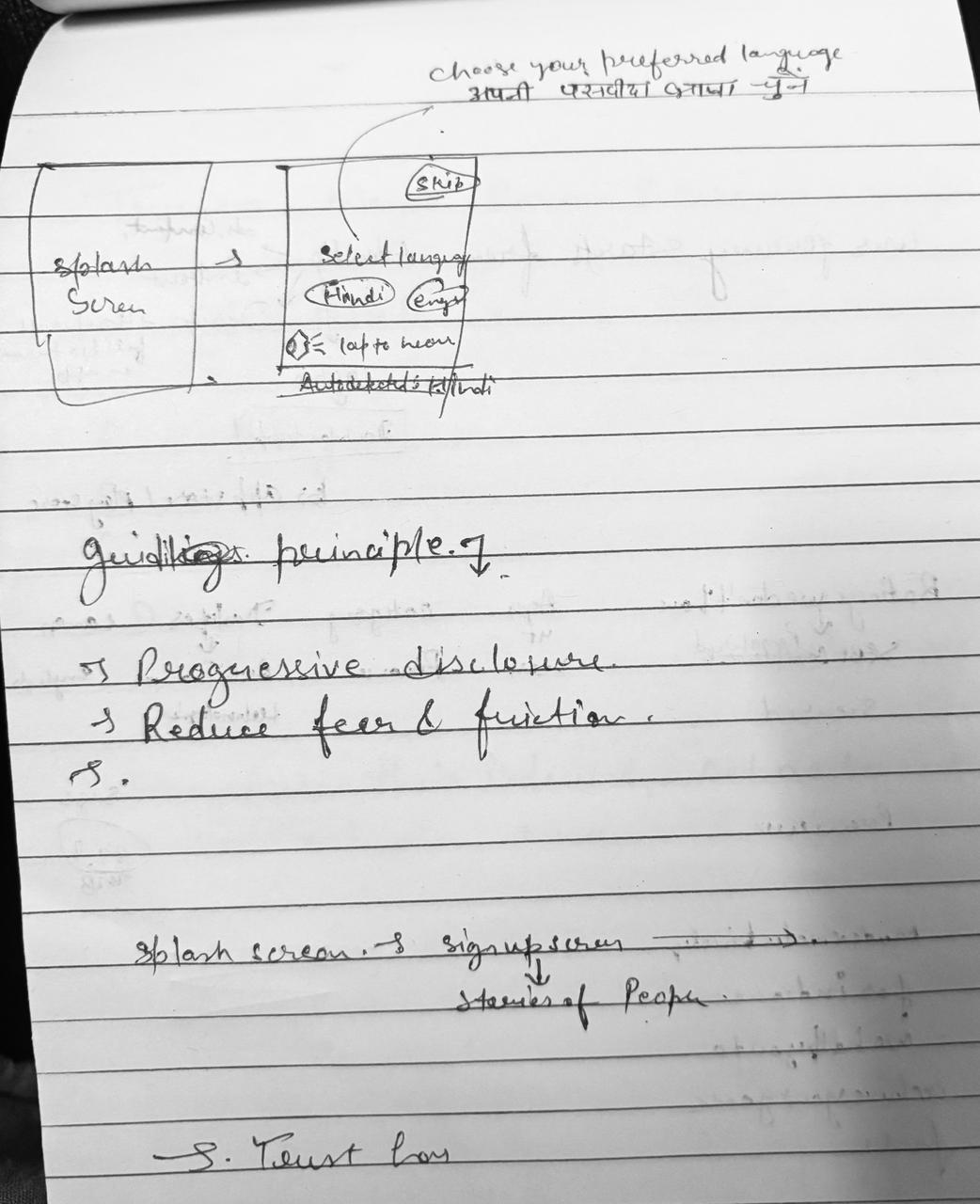
  • Progressive Disclosure

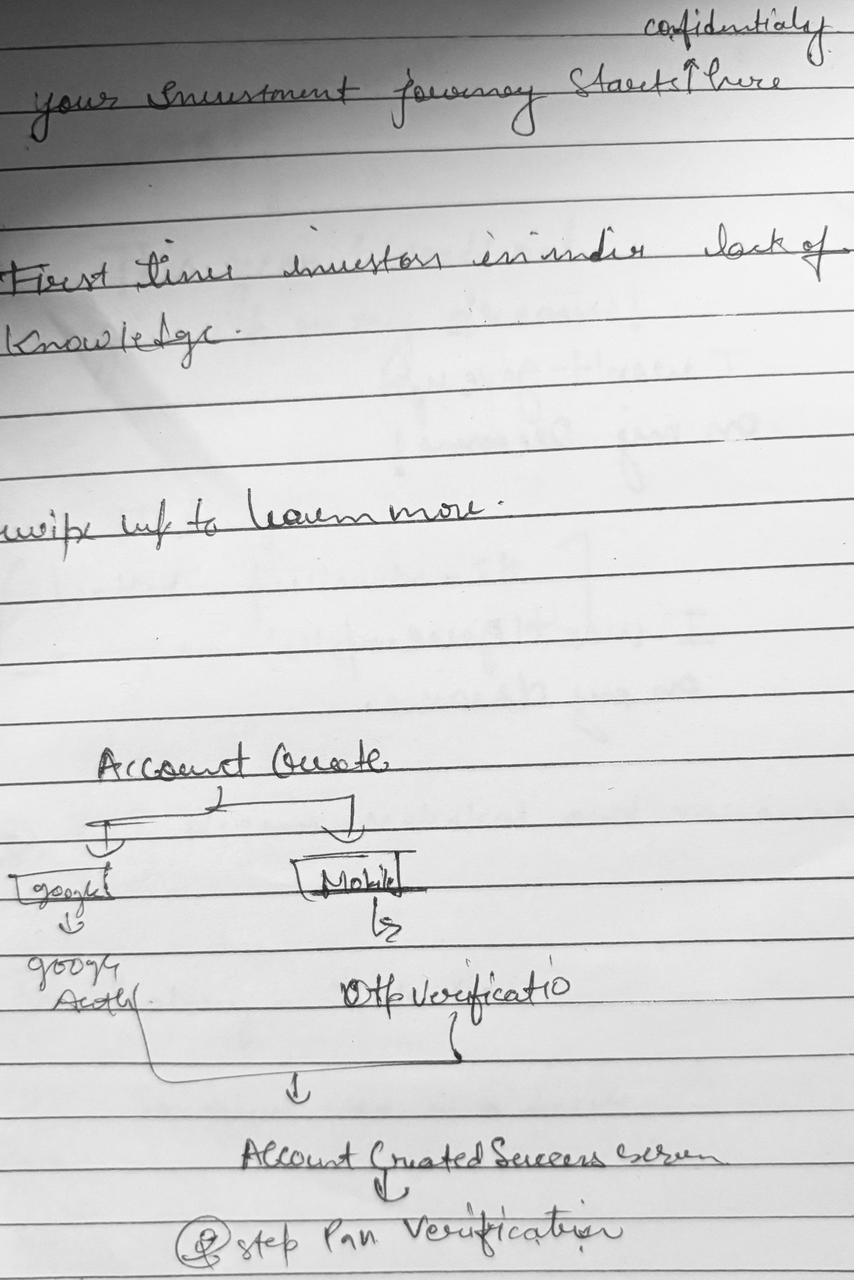
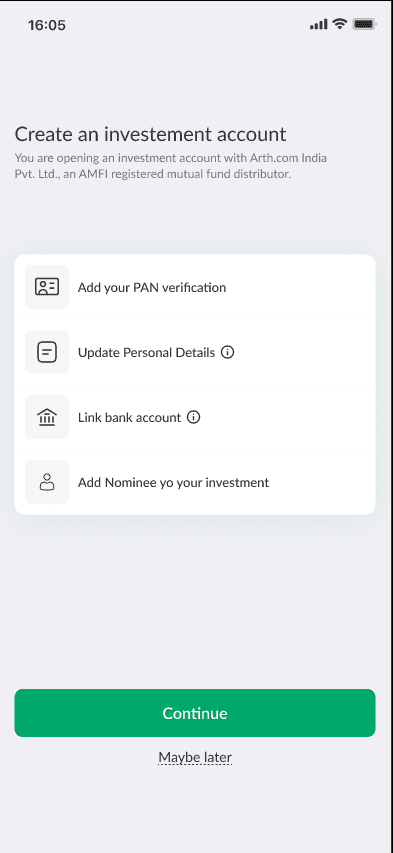
    Investment apps require heavy data entry. Use Progressive Disclosure, didn't show 20 fields at once. Break it into steps: 1. PAN, 2. Bank Details, 3. E-Sign.
  • Added intentional frictions

    purposeful friction is necessary. Adding a 1-second "Processing..." delay with a haptic pulse before a final trade confirmation makes the system feel "careful" rather than "impulsive."


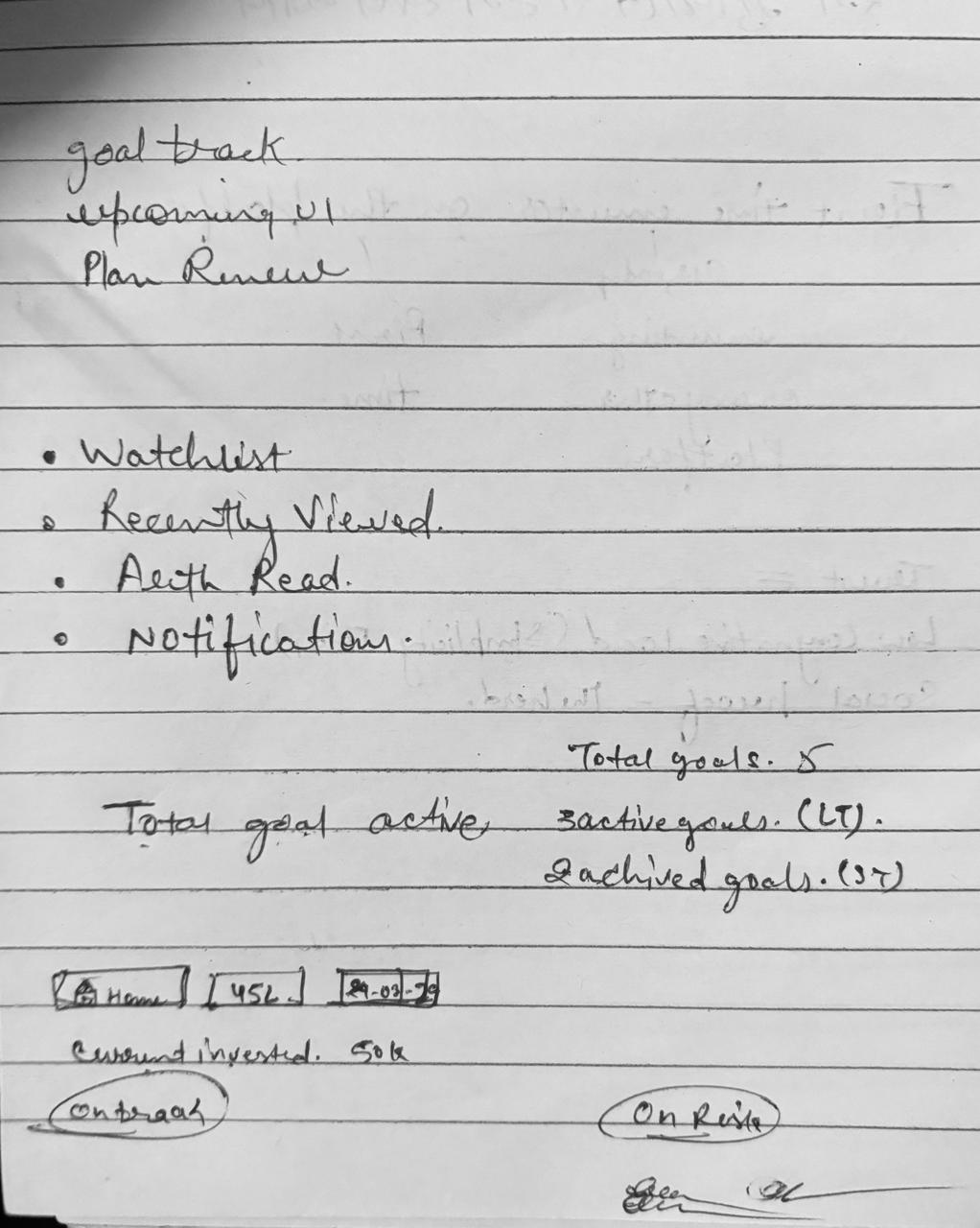
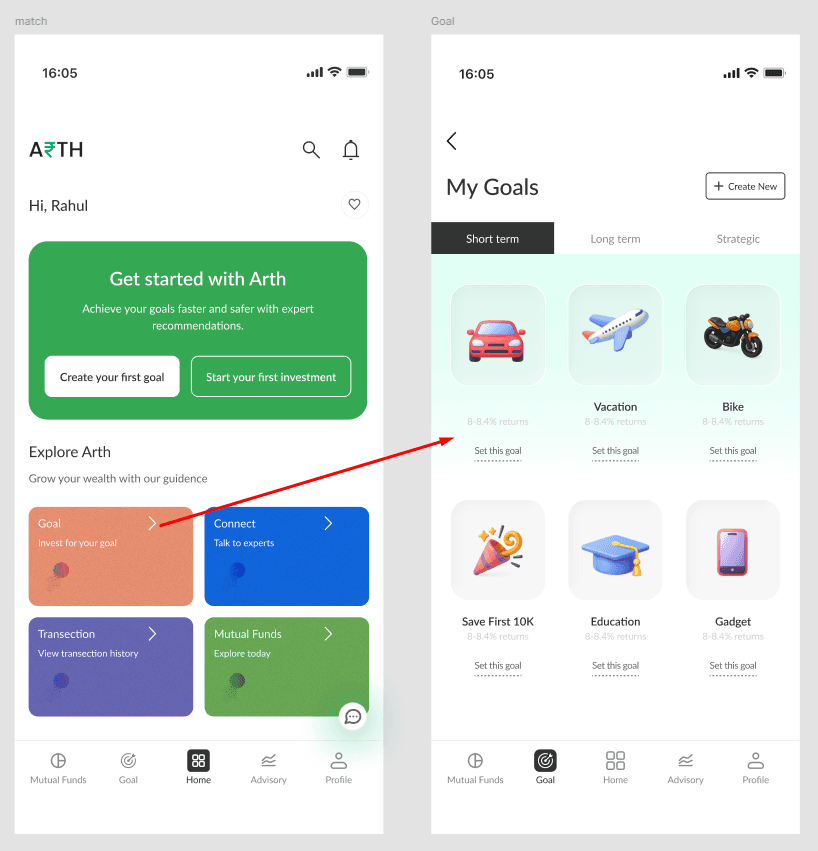
  • Goal cards as the primary home experience

    The home screen replaced the portfolio performance chart with goal cards showing each goal's name, progress bar, and a single "on-track / adjust" status. Portfolio value is accessible but deprioritized one tap away. This reduced average "time to understanding" in usability tests from 47s to 11s.
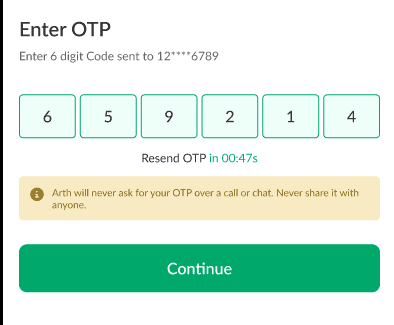
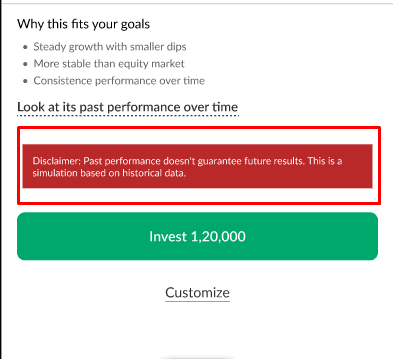
  • Kept Risk Disclosure and explainable AI Upfront

    Followed by SEBI & Regulatory guidelines Investment risks cannot be hidden in tiny grey text. They often need to be "above the fold" or presented in a high-contrast modal before the first investment.
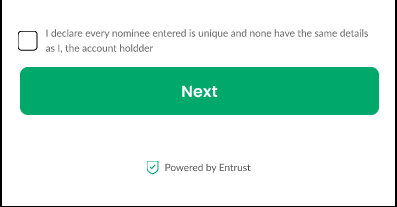
  • Banned dark patterns

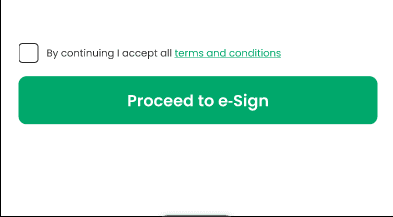
    no pre-filed checkboxes, Everything must be an active choice by the user.
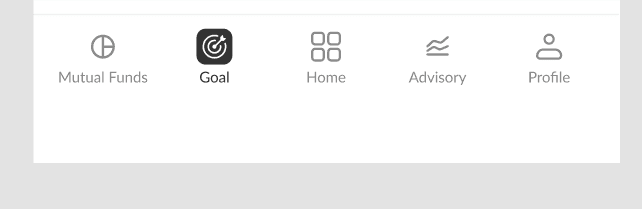
  • iOS (Human Interface Guidelines)

    Tab Bar: Use a bottom tab bar for primary navigation, Rely on a top-left "Back" button and the native left-to-right swipe gesture. filled/outlined states to show active tabs.
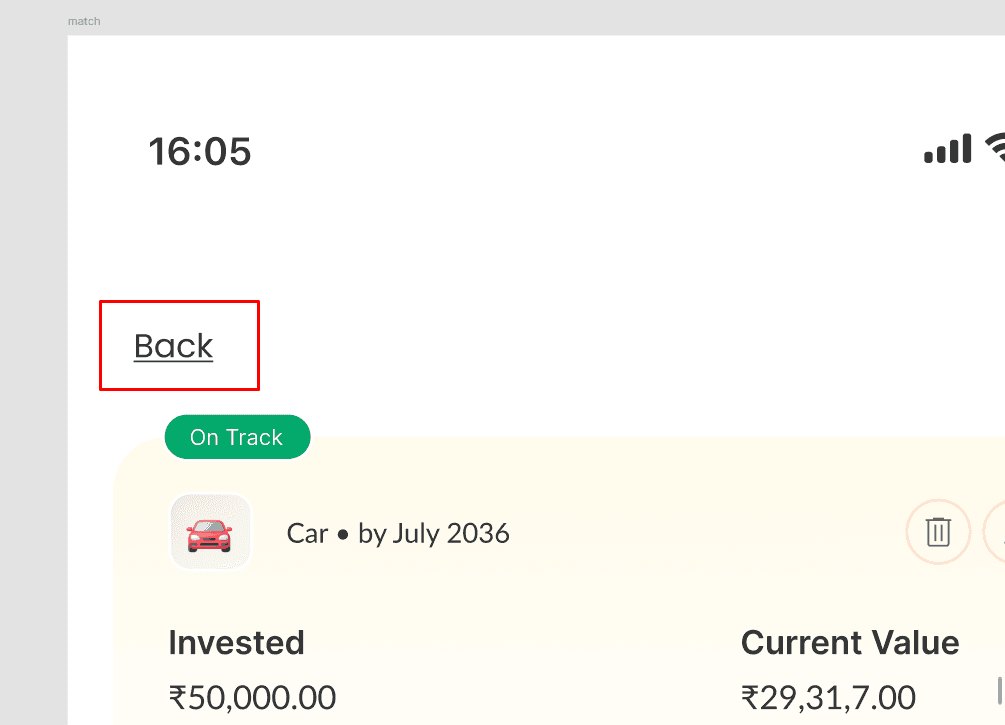
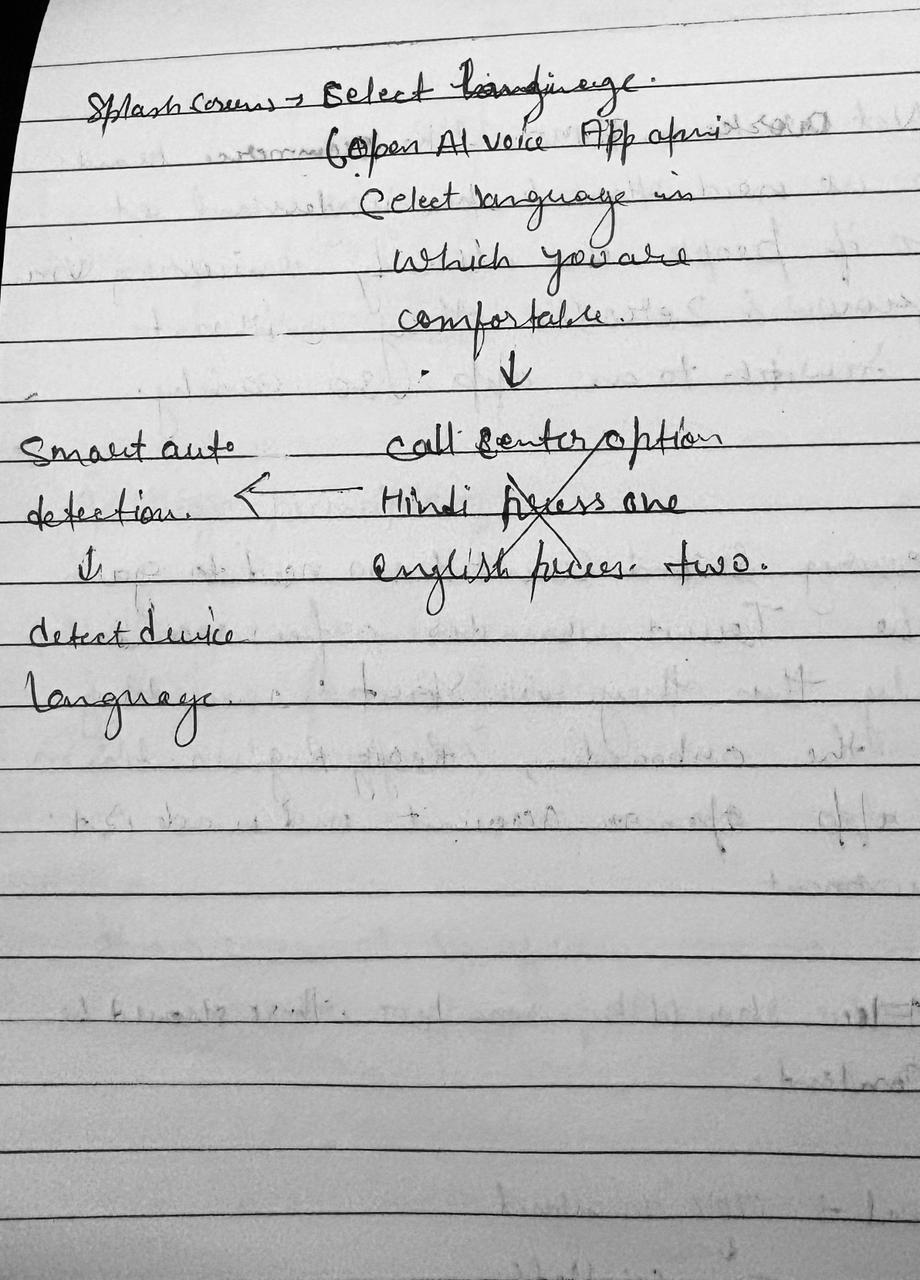
  • Goal-led onboarding — ask "what for?" before "how much risk?"

    "What are you saving for?" → timeline → monthly surplus. App calculates the SIP — user just says yes or adjusts.
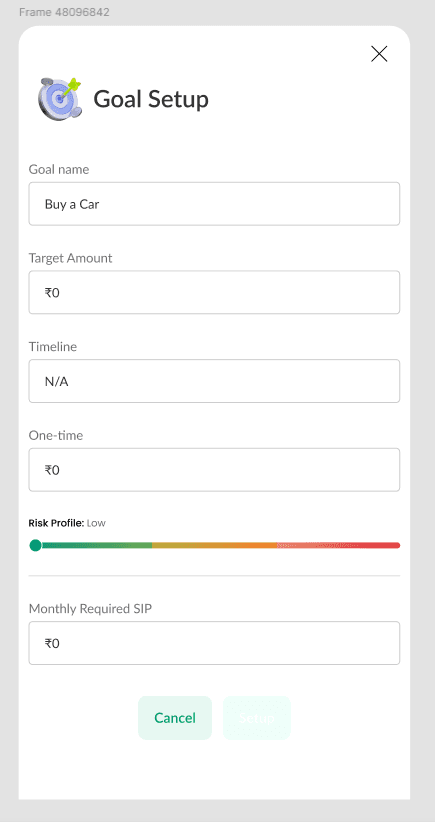
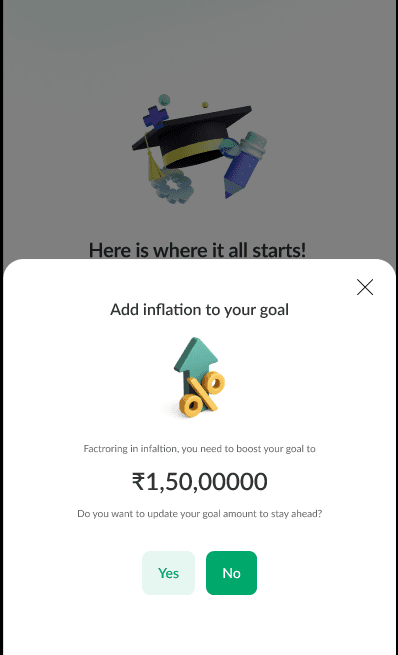
  • Applied Confirmation sheetand Modal Bottom Sheets

    iOS: Use "Action Sheets" that slide up from the bottom for trade confirmations. so in prototype if any pop up opens for confirmation in will be from bottom to unlike toast message on websites from top to right. Android: Use "Modal Bottom Sheets" with rounded corners (Material 3 style).
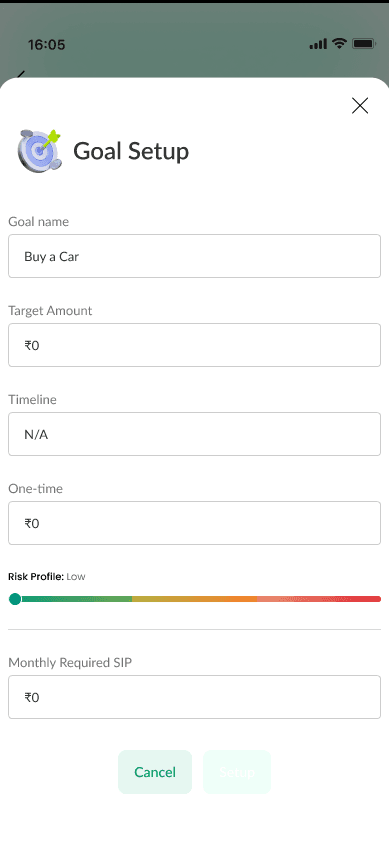
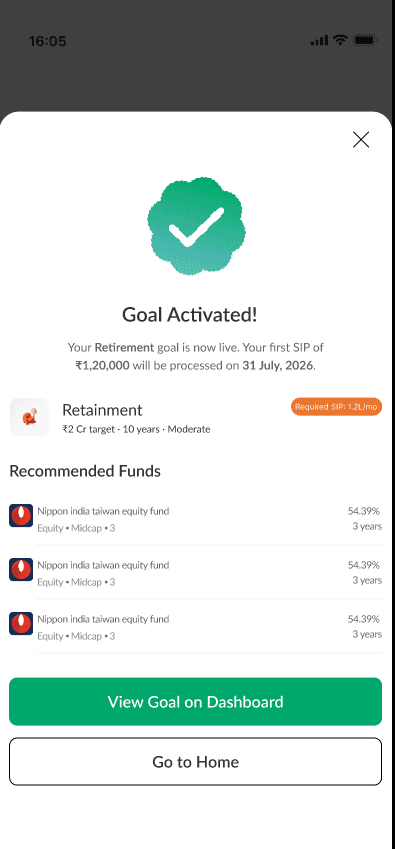
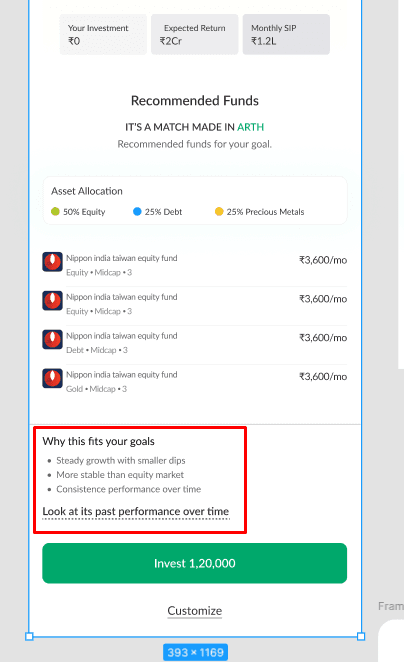
  • Fund recommendations with "why"

    Every suggested fund shows a one-line reason tied to the goal's timeline and risk. No fund jargon on the surface.
  • Milestone system with meaningful celebrates

    We introduced four milestone triggers: goal creation, 25% reached, 50% reached, and on-track anniversary. Each had a brief in-app animation and a concrete "next action" card (add a recurring deposit, update your target date). This was built with keeping the engineering team in mind to be entirely declarative no separate campaign tooling needed.
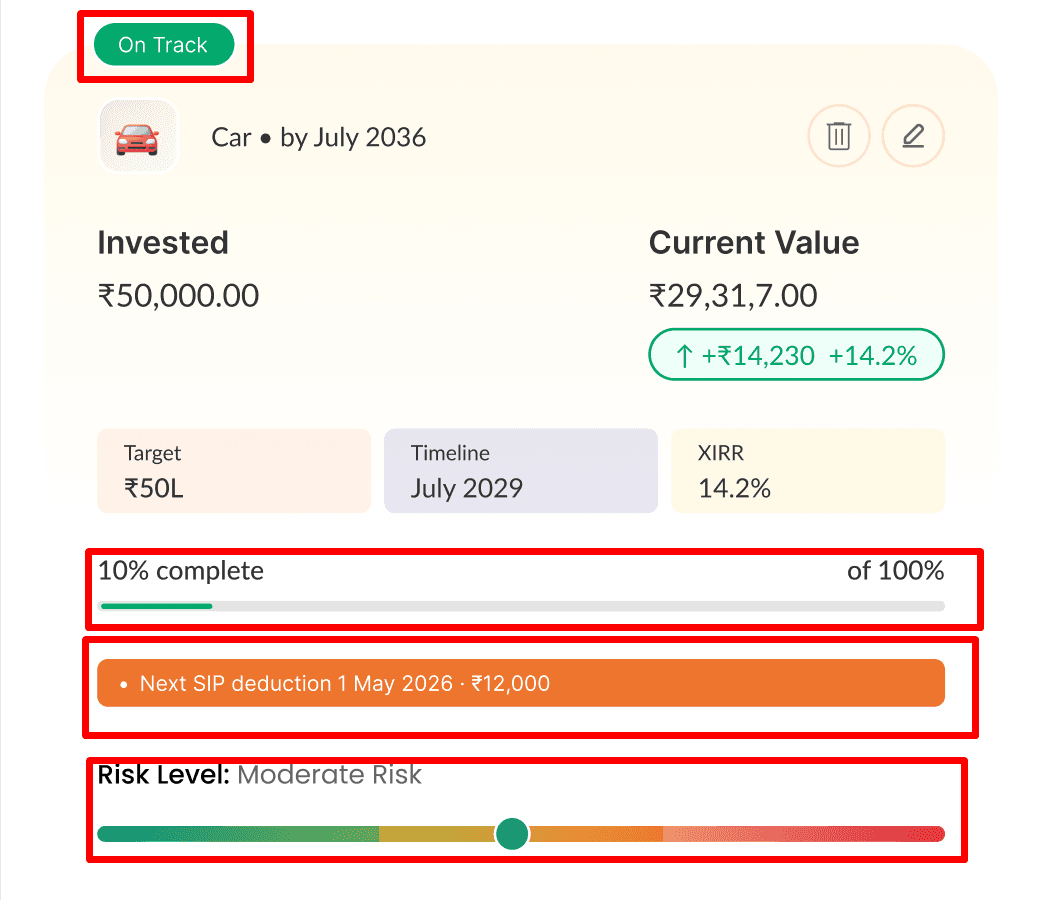
  • Monthly "goal check-in" nudge

    A gentle push notification + in-app moment that celebrates progress and suggests if a SIP top-up would help.

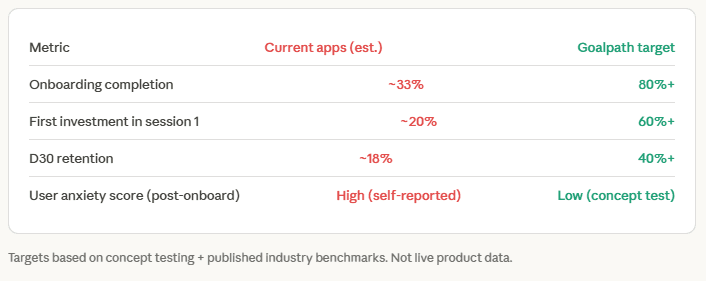
Expected Outcomes

What the design achieves vs existing apps
Visual Design

Visual Design

The Naming Theory and Logo

The Naming Theory and Logo

Naming a fintech product in India means balancing English readability, Hindi resonance, pronunciation across multiple Indian languages, App Store findability, and trademark viability-simultaneously. I spent a full day on it.

Naming a fintech product in India means balancing English readability, Hindi resonance, pronunciation across multiple Indian languages, App Store findability, and trademark viability-simultaneously. I spent a full day on it.

Name Explored

Name considered

Name considered

Why It Didn't Work

Why It Didn't Work

FinServe

FinServe

Financial + Service. Safe, descriptive, forgettable. Sounds like B2B middleware.

Financial + Service. Safe, descriptive, forgettable. Sounds like B2B middleware.

TopMoney

TopMoney

"Top" implies beating competitors. Wrong tone for a trust-first product.

"Top" implies beating competitors. Wrong tone for a trust-first product.

Finanstic

Finanstic

Fantastic + Finance. Clever once. Annoying with repeated use.

Fantastic + Finance. Clever once. Annoying with repeated use.

Nivesh

Nivesh

Hindi for investment. Accurate - but already the name of multiple=existing schemes. Legally messy.

Hindi for investment. Accurate - but already the name of multiple=existing schemes. Legally messy.

WHY ARTH WON

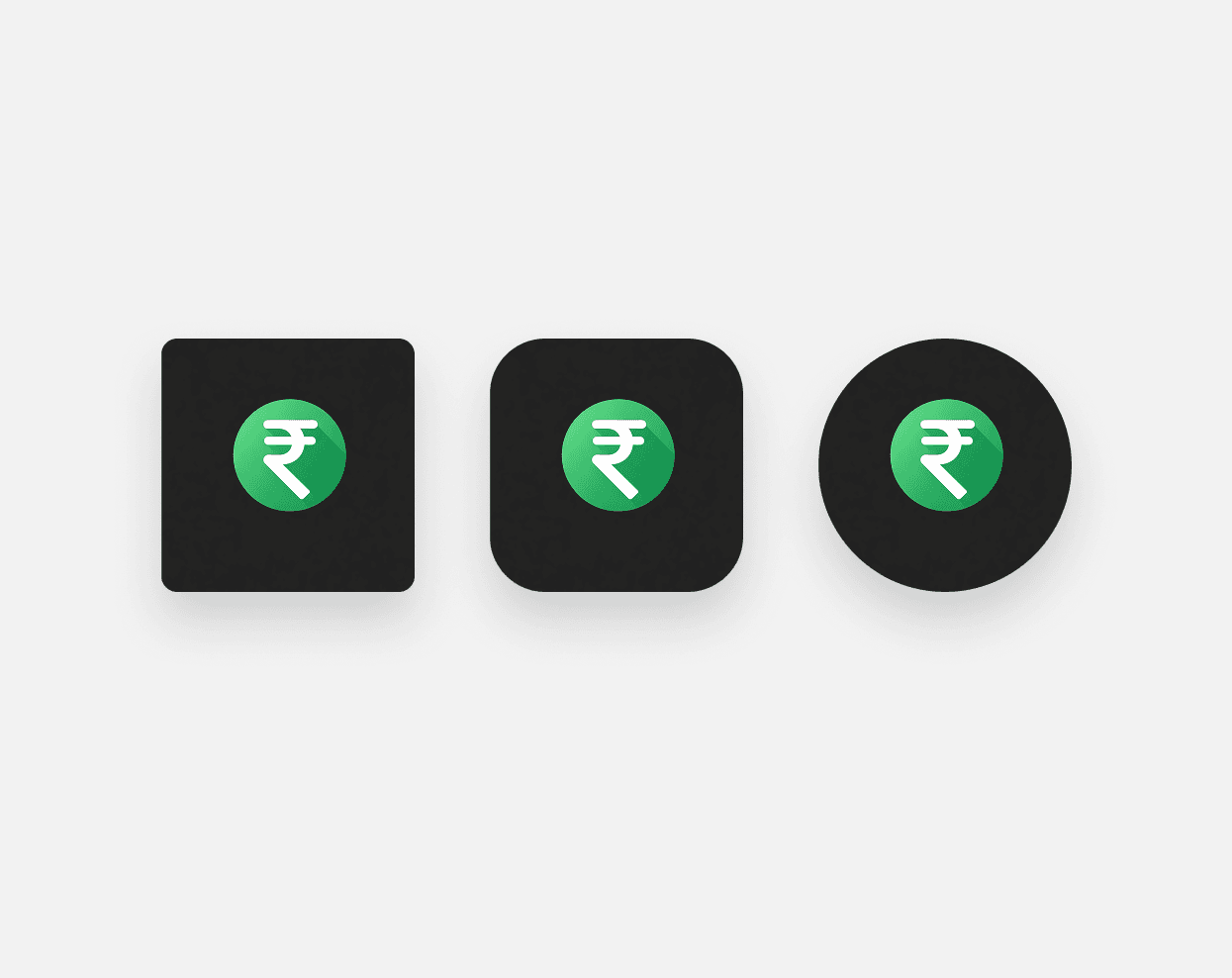
ARTH is Sanskrit for wealth, meaning, and purpose. It's the root of Arthashastra and Arthvyavastha (economics). It passes the "say it in every Indian language" test. And it carries two meanings at once — money and meaning — which is exactly the duality the product is built to create. The design team (me, in this case) had the idea to replace the R with the & symbol - turning the wordmark into a concept statement: this is a product about making money meaningful. Tagline Invest Meaningfully. Securely.

WHY ARTH WON

ARTH is Sanskrit for wealth, meaning, and purpose. It's the root of Arthashastra and Arthvyavastha (economics). It passes the "say it in every Indian language" test. And it carries two meanings at once — money and meaning — which is exactly the duality the product is built to create. The design team (me, in this case) had the idea to replace the R with the & symbol - turning the wordmark into a concept statement: this is a product about making money meaningful. Tagline Invest Meaningfully. Securely.

WHY ARTH WON

ARTH is Sanskrit for wealth, meaning, and purpose. It's the root of Arthashastra and Arthvyavastha (economics). It passes the "say it in every Indian language" test. And it carries two meanings at once money and meaning — which is exactly the duality the product is built to create. The design team (me, in this case) had the idea to replace the R with the & symbol - turning the wordmark into a concept statement: this is a product about making money meaningful. Tagline Invest Meaningfully. Securely.

The tagline wrote itself: Invest Meaningfully. Securely.' - Meaningful =goal-aligned, personally relevant. Securely = SEBI-compliant, protected honest.

The tagline wrote itself: Invest Meaningfully. Securely.' - Meaningful =goal-aligned, personally relevant. Securely = SEBI-compliant, protected honest.

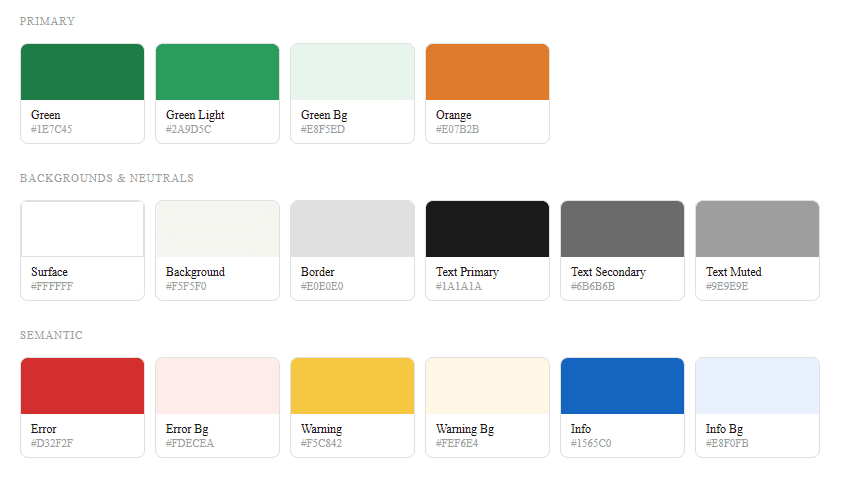
Color

Color

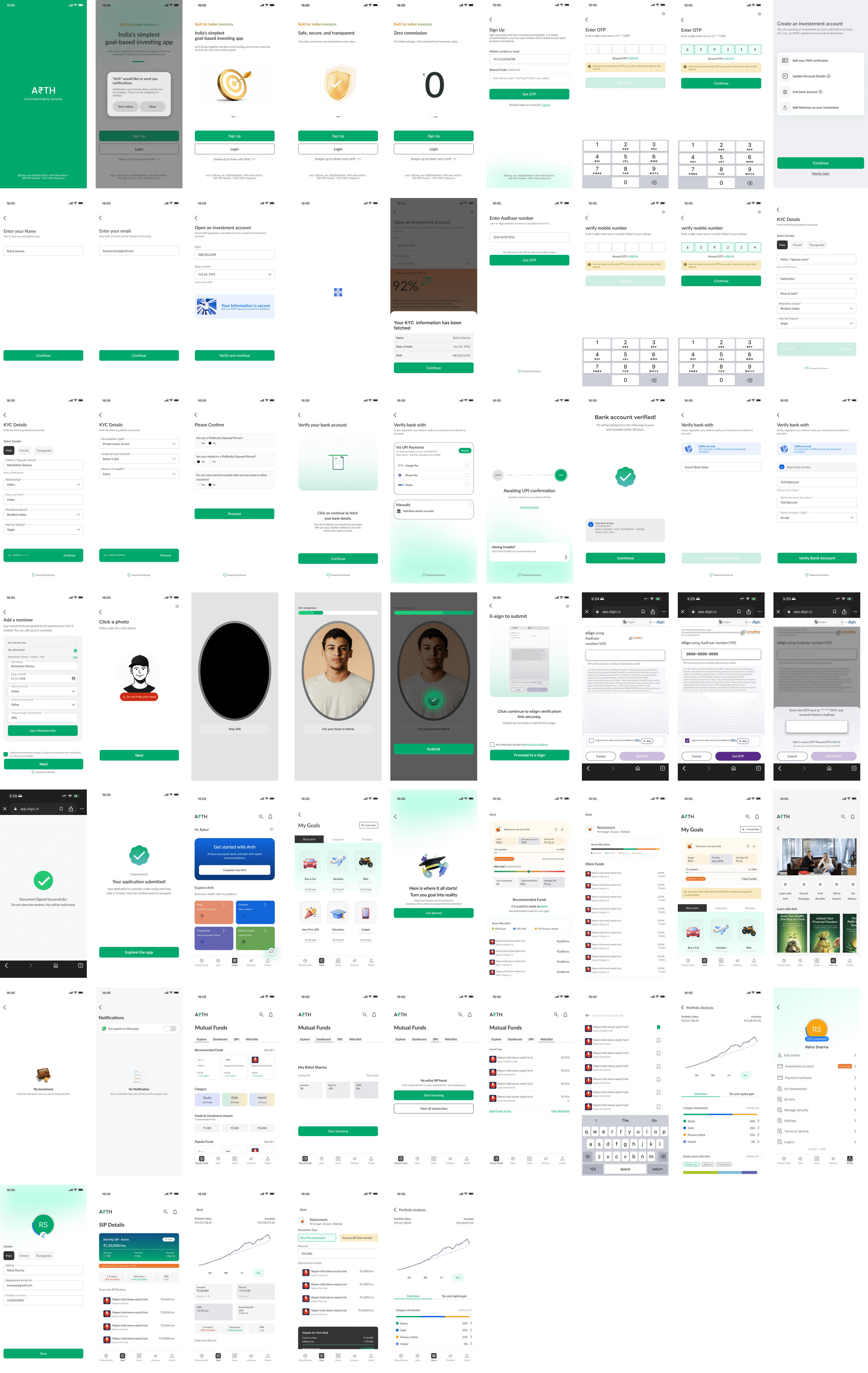
Screens

90+screens


View Prototyping

Screens

90+screens


View Prototyping

Key Learnings

  1. Information architecture is an emotional decision

    What you show first tells users what matters. Hiding returns isn't burying data it's saying "your goal matters more than today's noise." IA encodes product values.

  1. Solo projects reveal your prioritisation instincts

    With no PM or stakeholder to delegate to, I had to decide what the MVP needed vs what was nice-to-have. I cut social features, referral mechanics, and dark mode to stay focused on core flow quality.

  1. What I'd do differently

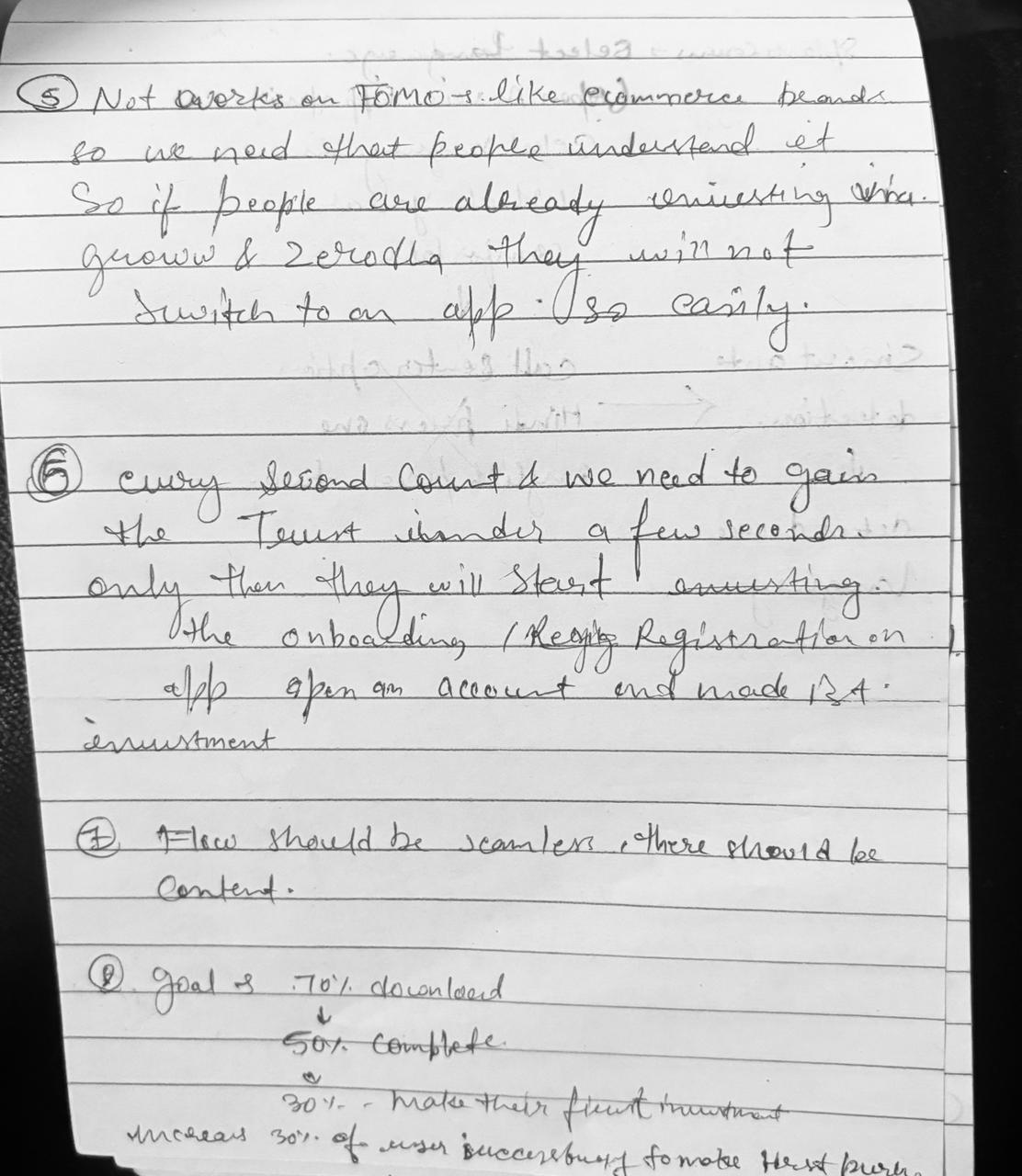
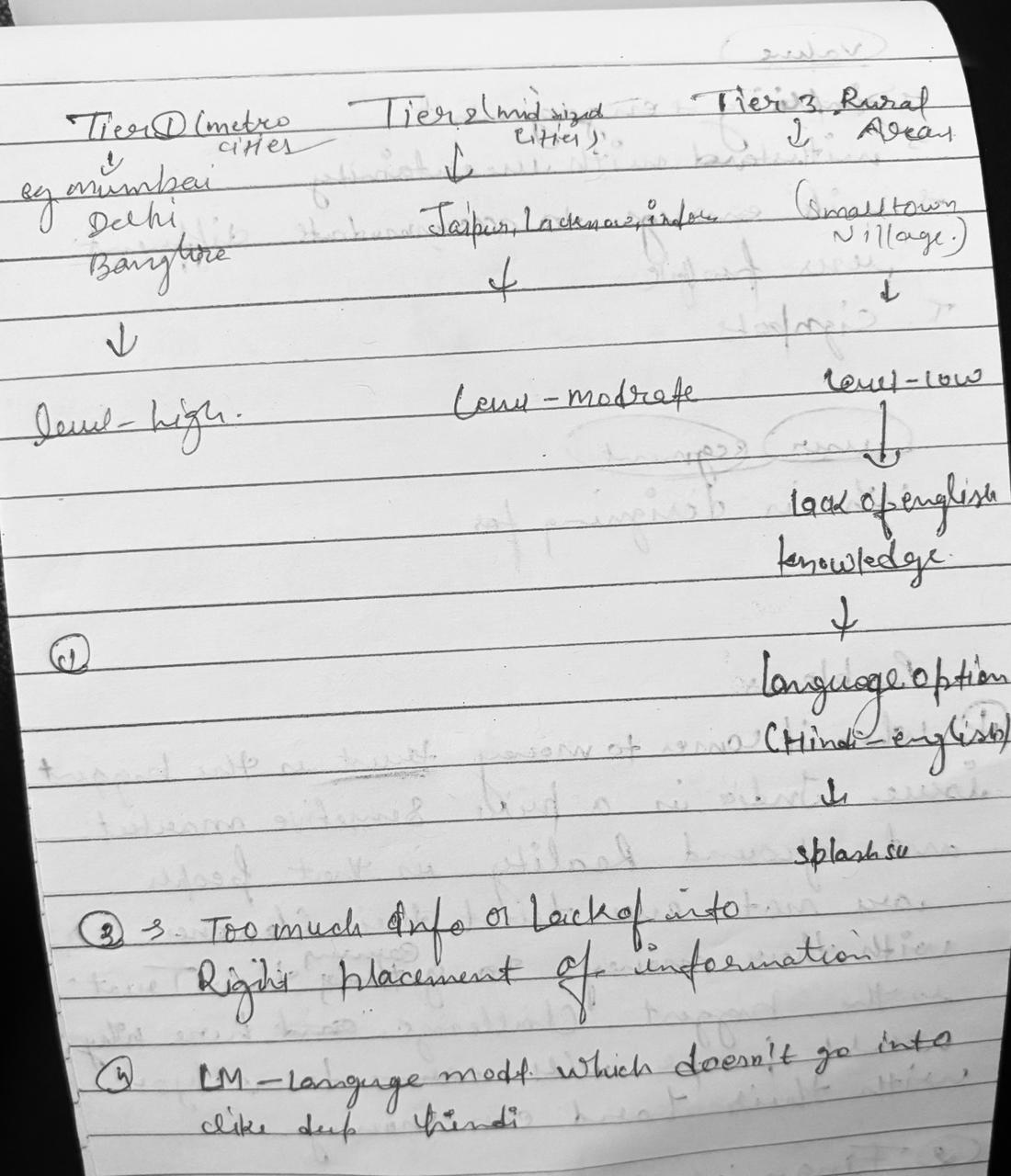
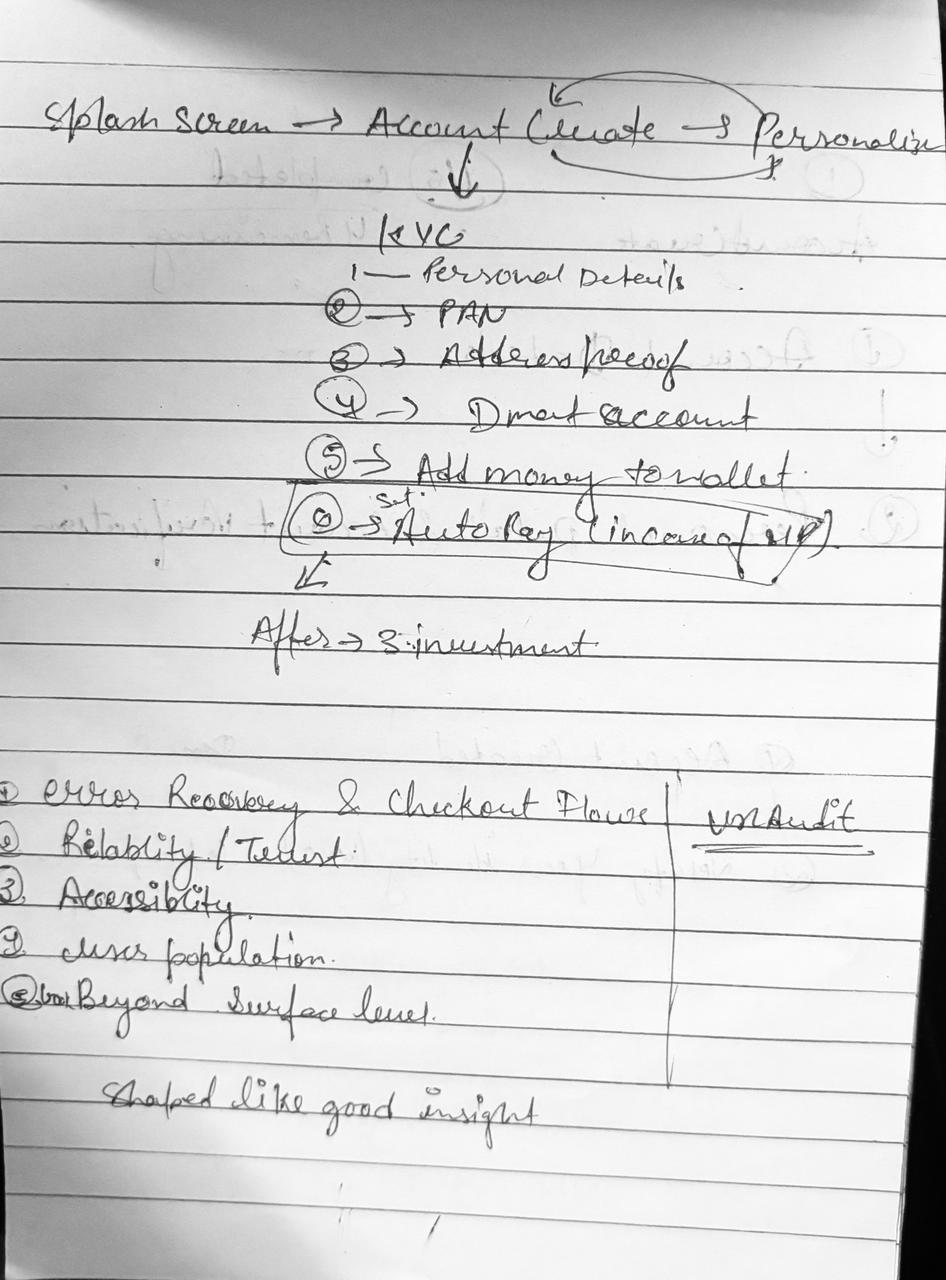
    I'd conduct diary studies over 2 weeks instead of one-shot interviews. Financial behavior is habitual a snapshot misses how people actually feel at the end of a stressful month. below is snapshots of my 2weeks dairy studies.

  1. Learnt What is Sandboxing, System-Level Permissions, Accessibility Services, Screen Obscuration, Bloomberg principle, the Custodian (like CDSL or NSDL), Logic Engines, Payment gateway like ACH,
Create a free website with Framer, the website builder loved by startups, designers and agencies.