

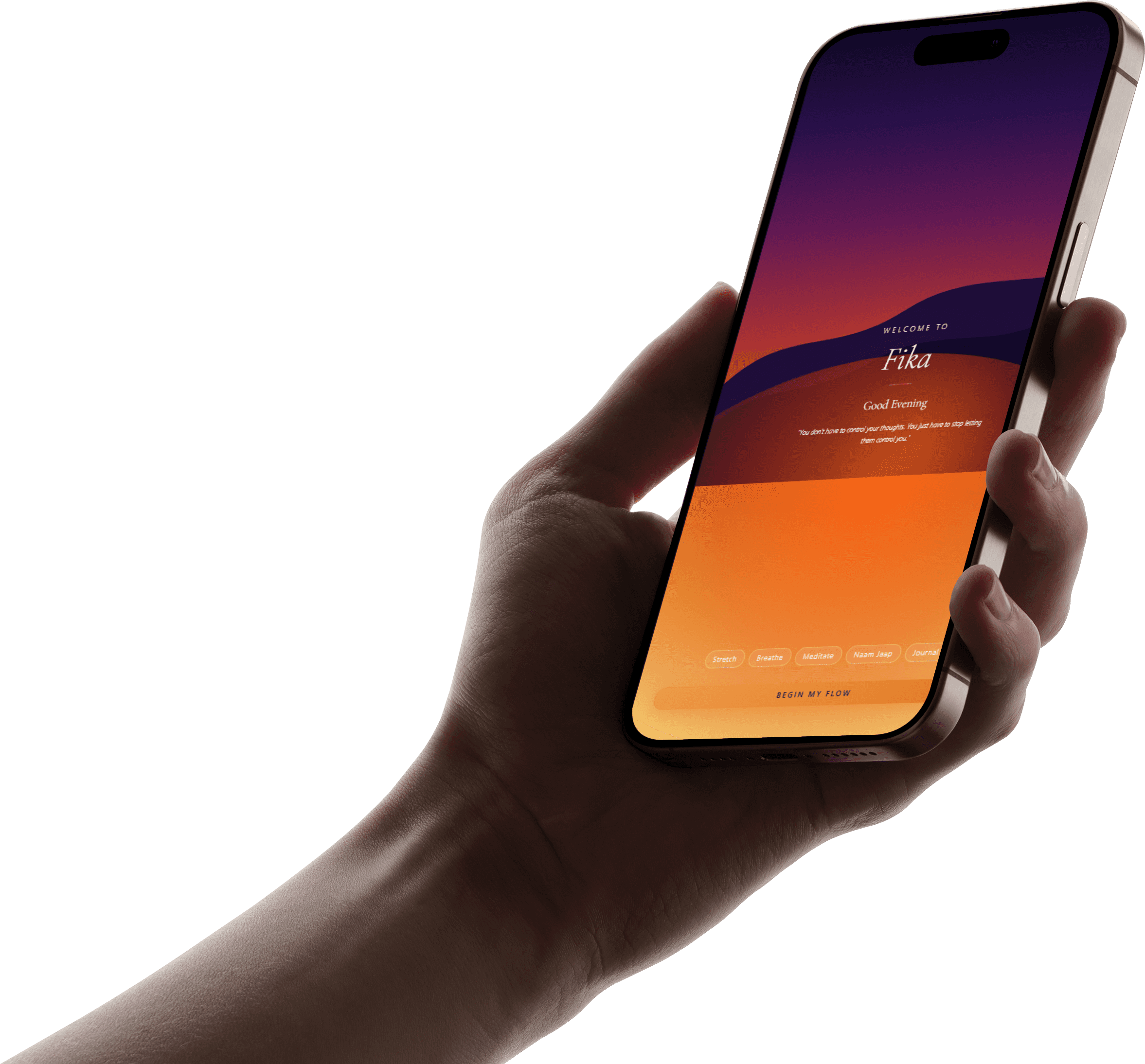
Overview
Fika is a self-initiated passion project exploring how product design can help me slow down, reset, and stay present. I designed Fika as a guided self-care flow that combines stretching, breathwork, meditation, chanting, and journaling into one uninterrupted experience.
Problem
Overview
Modern routines keep me in a constant state of mental stimulation. At the same time:
Long sitting hours create physical stiffness
Mental fatigue makes self-care feel effortful
Existing wellness routines require multiple apps and decisions
I often found myself switching between: YouTube for meditation, Journaling apps, Timers and ambient sound apps
This created: Decision fatigue, Broken focus, Inconsistent routines
Fika is a guided self-care system designed to replace fragmented wellness habits with a single, uninterrupted ritual. Instead of juggling meditation apps, journaling tools, and YouTube routines, Fika creates a structured flow that transitions users from physical relaxation to mental clarity.
Long-Term Impact
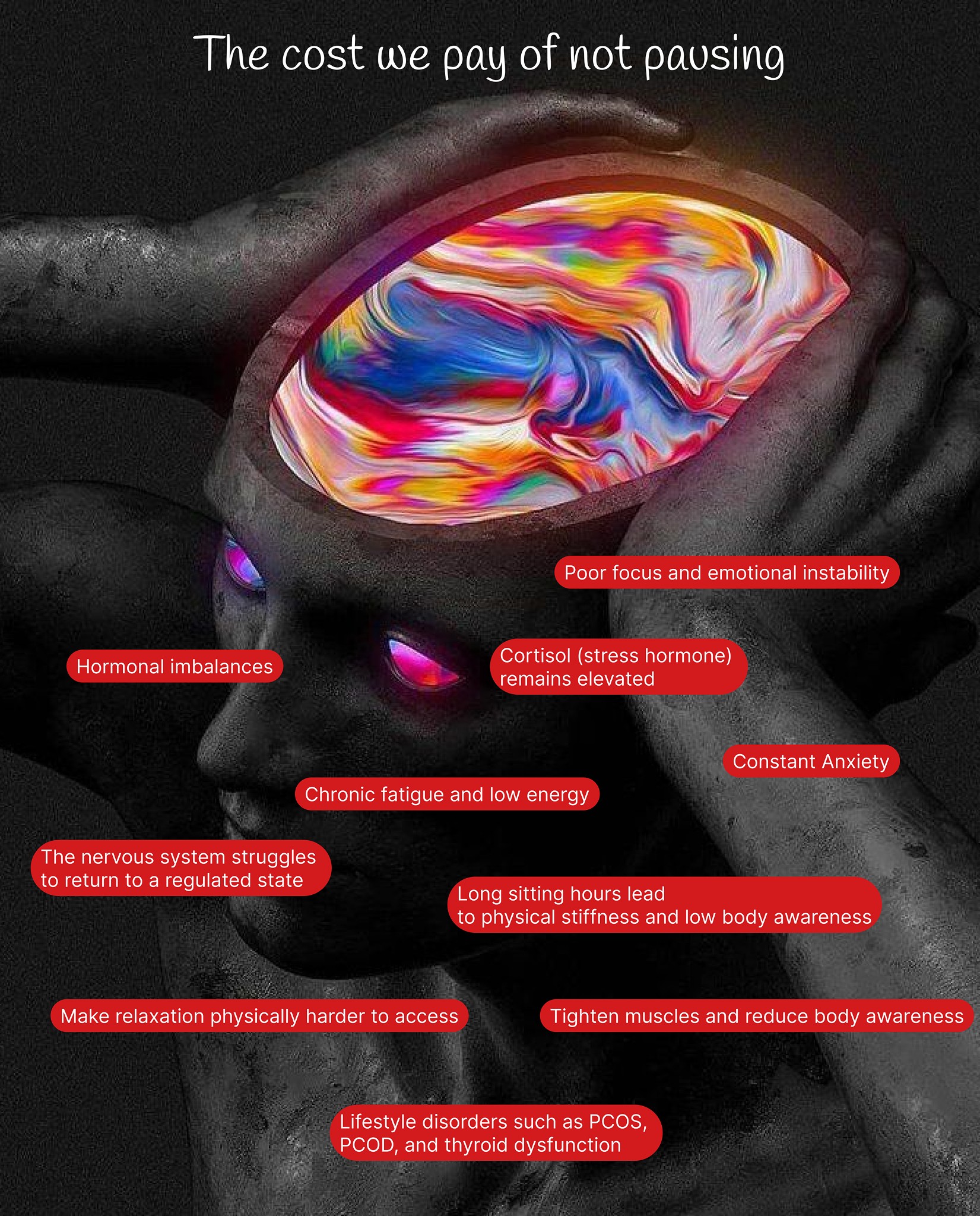
The cost of not pausing isn’t just mental—it compounds into physical and hormonal imbalance over time.
Users who do not want to pay for subscription and even if they have they need to rely on multiple tools: meditation can be unerupted with we have subscription no ads but can't journal in this.
YouTube for meditation
Separate apps for journaling or timers
Personal guesswork to structure routines
This leads to:
Constant decision fatigue (“what should I do next?”)
Breaks in focus due to switching contexts
Inconsistent and incomplete sessions
More data Usages everyday
Key Insight
Self-care doesn’t fail because I lack intent. It fails because the experience lacks flow. Every interruption during recovery pulls attention out of the moment. I saw an opportunity to design a calmer, uninterrupted ritual instead of another isolated wellness feature.
Stay
Present

Complete
Sessions
Build
consistency
into a
Sessions
Opportunity
Opportunity
Removes decision-making during self-care
Guides users through a natural body → mind progression
Helps the nervous system actually reset
Creates a continuous, interruption-free experience
Solution Hypothesis
If we create a dedicated space where users don’t have to juggle between multiple tools, and instead guide them through a structured flow inspired by yoga science—
from warming up the body → regulating breath → focusing the mind → expressing thoughts—in one uninterrupted session, then users will be able to stay fully present for 30–40 minutes, allowing both their body and mind to reset without friction.
To solve this, I built Fika (is a typical Swedish tradition where you take time out of your day to pause and enjoy a hot drink and a snack.
How the Solution Works
To solve this, I built Fika (is a typical Swedish tradition where you take time out of your day to pause and enjoy a hot drink and a snack.
Users start once and enter a continuous guided flow
No switching between apps, no decisions mid-session
Each step naturally transitions into the next
The experience mirrors how the body moves from activity to stillness
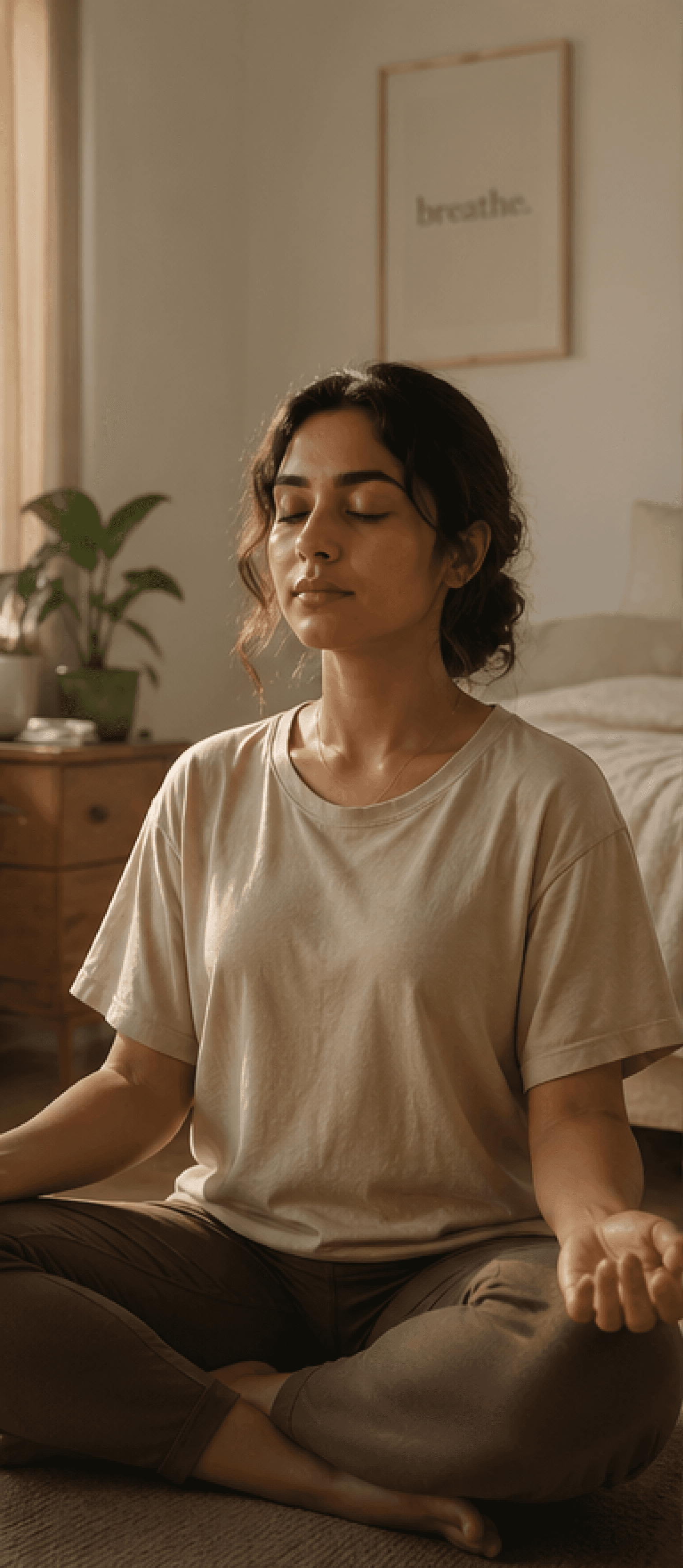
Fika is not a random collection of practices. It’s a carefully curated sequence, inspired by how the body and mind naturally transition into a state of focus and stillness.
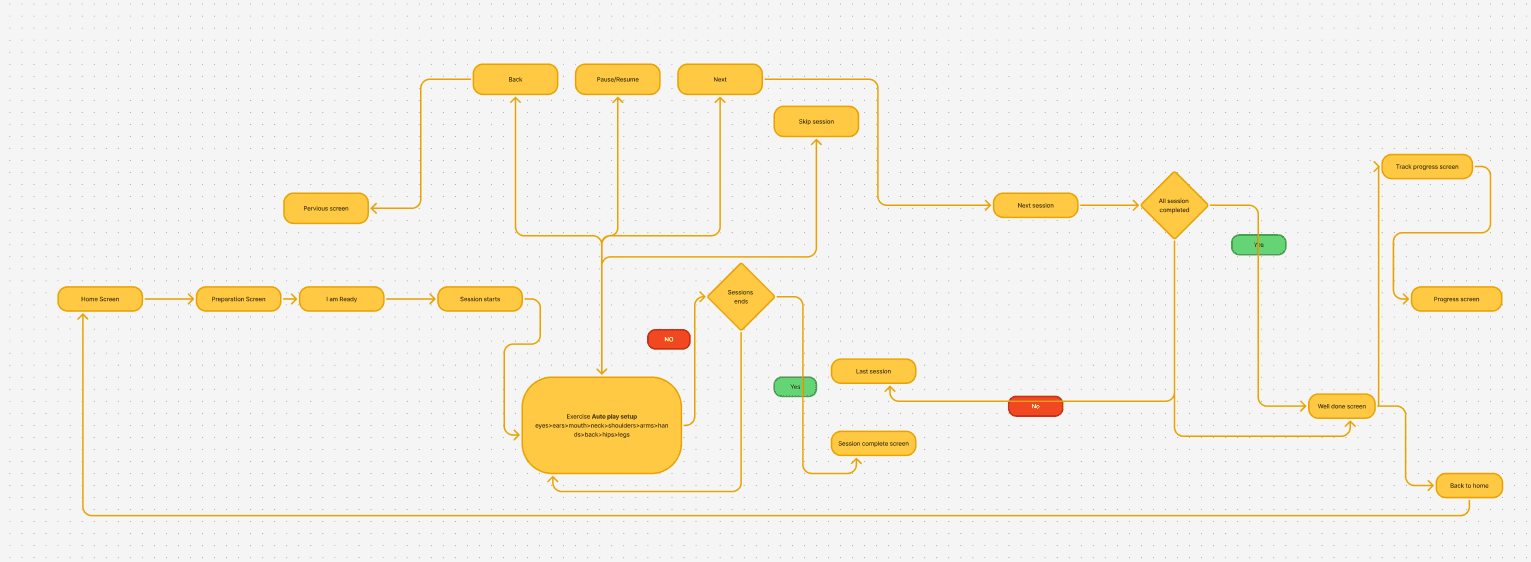
In many yoga traditions, the journey inward follows a progression—moving from physical activation to mental clarity. Start once, stay in flow, and let the system guide your reset. Fika follows a similar flow:
Users start once and enter a continuous guided flow
No switching between apps, no decisions mid-session
Each step naturally transitions into the next
The experience mirrors how the body moves from activity to stillness
Fika is not a random collection of practices. It’s a carefully curated sequence, inspired by how the body and mind naturally transition into a state of focus and stillness.
In many yoga traditions, the journey inward follows a progression—moving from physical activation to mental clarity. Start once, stay in flow, and let the system guide your reset. Fika follows a similar flow:
Stretching
This is where the journey begins.
The body gradually warms up
Stiffness reduces
Movement opens up the body
Preparing the body allows everything that follows to feel more natural and comfortable.
Stretching
This is where the journey begins.
The body gradually warms up
Stiffness reduces
Movement opens up the body
Preparing the body allows everything that follows to feel more natural and comfortable.
Breathwork
Once the body is open, breathwork becomes more effective.
Breathing feels deeper and smoother
The nervous system begins to slow down
The mind starts shifting into a calmer state
This stage transitions the body from activity → regulation.
Breathwork
Once the body is open, breathwork becomes more effective.
Breathing feels deeper and smoother
The nervous system begins to slow down
The mind starts shifting into a calmer state
This stage transitions the body from activity → regulation.
Meditation
With the body relaxed and breath steady:
Mental noise reduces
Attention becomes more stable
It becomes easier to stay present
You’re not forcing stillness—you’re arriving at it.
Meditation
With the body relaxed and breath steady:
Mental noise reduces
Attention becomes more stable
It becomes easier to stay present
You’re not forcing stillness—you’re arriving at it.
Naam Jap
After settling into stillness:
Repetition builds concentration
Focus deepens
The mind becomes more anchored
This strengthens attention before moving into reflection.
Naam Jap
After settling into stillness:
Repetition builds concentration
Focus deepens
The mind becomes more anchored
This strengthens attention before moving into reflection.
Journaling
By this stage:
The body is relaxed, breath is calm and mind is focused
This creates the right state to:
think clearly, reflect honestly and express without distraction
Journaling
By this stage:
The body is relaxed, breath is calm and mind is focused
This creates the right state to:
think clearly, reflect honestly and express without distraction
Context: Why This Matters
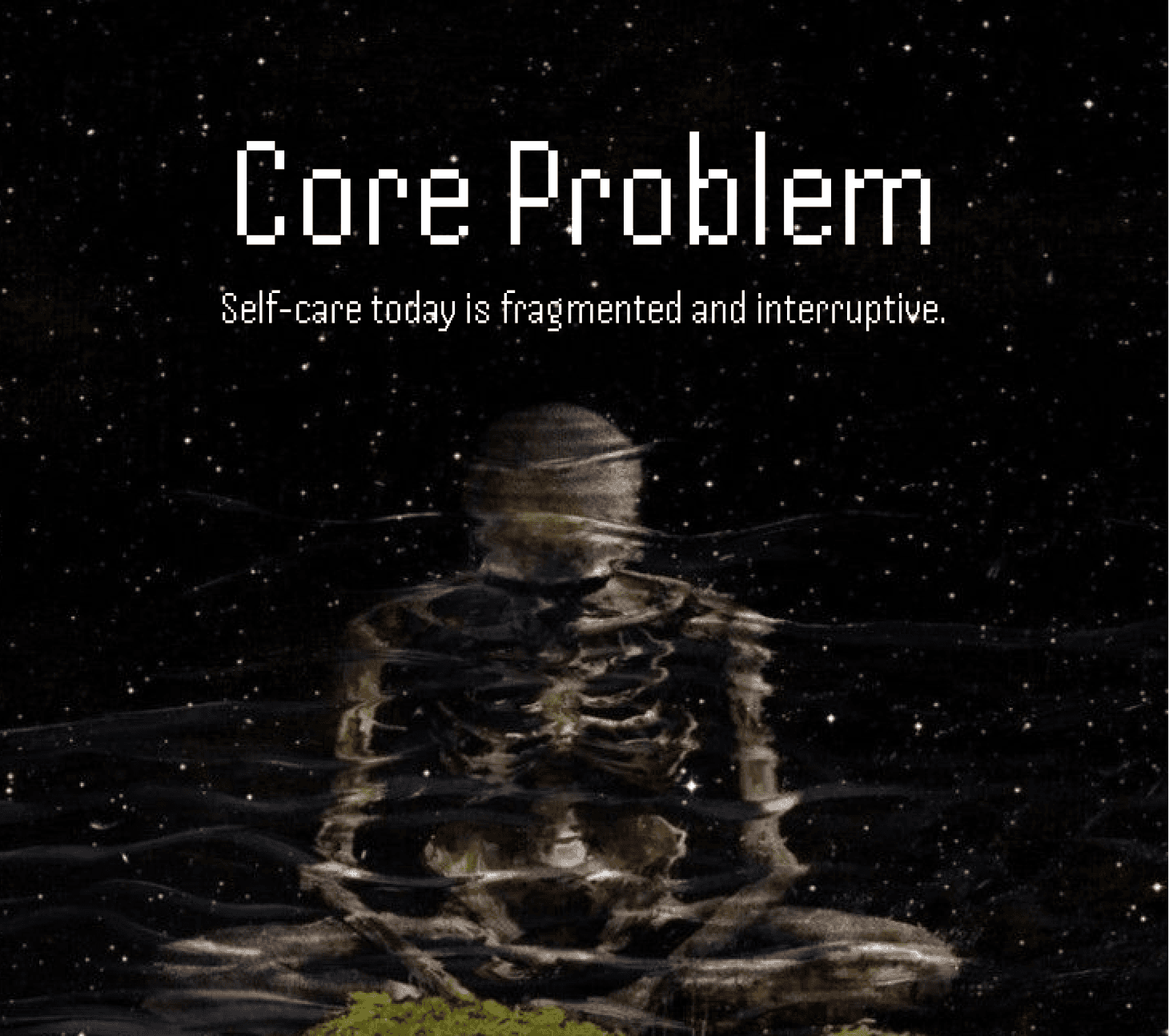
Core Problem
We’re constantly “on”—working, thinking, switching contexts, and performing throughout the day. This sustained cognitive load keeps the nervous system in a heightened state, making it difficult to truly slow down.
At the same time:
Long sitting hours lead to physical stiffness and low body awareness
Mental fatigue makes even simple practices feel effortful
Spending 20–30 minutes on self-care starts to feel like a luxury
People want to take care of themselves—but struggle to follow through consistently.

Structured flow over flexibility
Users are guided step-by-step to reduce decision fatigue and improve completion.
Multi-step ritual over single feature
Integrates body, breath, mind, and reflection into one continuous experience.
Minimal UI during sessions
Reduces interactions to maintain immersion and uninterrupted flow.
Minimal UI during sessions
Reduces interactions to maintain immersion and uninterrupted flow.
No login or sign-up barrier
Enables instant start to prioritize habit formation over data capture.
Background continuity (works with screen off)
Allows sessions to continue without screen dependency for deeper relaxation.
Contextual themes based on time of day
Adapts visuals to natural cycles to create a more intuitive and calming experience.
Presence-driven quotes
Uses gentle prompts to bring users back to the present moment.
Flexible controls within flow
Provides pause, skip, and navigation to avoid feeling restrictive.
Audio-first experience
Uses sound cues to guide users without requiring visual attention.
Progress-based completion system
Encourages users to complete all stages through visible progress.
Calm, supportive UX copy
Uses language that feels reassuring and non-judgmental.
Calm, supportive UX copy
Uses language that feels reassuring and non-judgmental.
Design Decisions
Lightweight progress tracking
Builds awareness and consistency without adding pressure.
Flexibility Layer
While the system is structured, it respects real-life constraints: Users can skip steps based on time or need. They can engage with only the parts their body demands. The flow adapts without breaking continuity
Metrics & Impact
Metrics & Impact
This is an early-stage product, so success is measured through behavioral change, not scale.
Primary Metrics
Primary Metrics
Session Completion Rate ↑
Average Session Duration ↑
Drop-offs Between Steps ↓
Repeat Usage (Weekly Retention) ↑
Observed Outcomes
20 users included it into their morning routines on weekends
Reduced switching between apps during sessions
8/20 people completed whole 30-40 minutes sessions
Feedbacks
Meditation sound needs to feel more calmer
Add more Back related stretching
Add OM chanting sounds instead of Naap Jap (was in plan already for phase 2)
Working with AI — What Actually Changed
Speed: Faster Execution, Not Faster Thinking
The time saved in execution was often spent in decision-making and iteration.
Speed: Faster Execution, Not Faster Thinking
The time saved in execution was often spent in decision-making and iteration.
Creativity: Shifted, Not Replaced
Instead of: manually designing everything
I was: directing, refining, judging outputs
Creativity moved from “making” to “guiding and shaping.”
Creativity: Shifted, Not Replaced
Instead of: manually designing everything
I was: directing, refining, judging outputs
Creativity moved from “making” to “guiding and shaping.”
Time: Surprisingly Similar
With the body relaxed and breath steady: Mental noise reduces. Attention becomes more stable. It becomes easier to stay present. You’re not forcing stillness—you’re arriving at it.
Time: Surprisingly Similar
With the body relaxed and breath steady: Mental noise reduces. Attention becomes more stable. It becomes easier to stay present. You’re not forcing stillness—you’re arriving at it.
Role Evolution: Designer → Director + Builder
My role expanded beyond design.
I became: a designer, developer (to some extent), a product thinker and a prompt engineer
It felt like working as an IC (Individual Contributor) handling multiple roles at once.
Role Evolution: Designer → Director + Builder
My role expanded beyond design.
I became: a designer, developer (to some extent), a product thinker and a prompt engineer
It felt like working as an IC (Individual Contributor) handling multiple roles at once.
Craft is missing
One unexpected gap:
The hands-on feeling of crafting was missing.
Less direct control
More dependency on generated outputs
The process became:
less tactile
more instruction-driven
Craft is missing
One unexpected gap:
The hands-on feeling of crafting was missing.
Less direct control
More dependency on generated outputs
The process became:
less tactile
more instruction-driven
Credits burnout is new KPI
AI usage came with real constraints:
Limited credits
Cost of iteration
Need to be intentional with prompts
This forced me to:
think before generating
prioritize decisions
reduce unnecessary exploration
Credits burnout is new KPI
AI usage came with real constraints:
Limited credits
Cost of iteration
Need to be intentional with prompts
This forced me to:
think before generating
prioritize decisions
reduce unnecessary exploration
Trade-offs & Constraints
Avoided deep customization (timing, sequence, themes).
We removed sign-up to reduce friction.
We guided users through a fixed sequence for lower cognitive load and smoother progression
Avoided gamification, notifications, and high-stimulation elements for more authentic, pressure-free self-care experience
The product is built as a focused, working system with limited users. Faster learning and iteration on core behavior
Impact
Yes—Fika is live. While it’s not a fully polished public product, it functions as a working system that I use daily. It has also seen organic adoption, with ~20 users engaging with it over weekends. Currently, I’m improving the stretching experience and refining the Naam Jap module by introducing user choice between guided chanting and OM-based sound sessions.
Appreciate you being here. 🙌
Appreciate you being here. 🙌
Fika - Designing a Ritual for Recovery in a World That Never Pauses
Users rely on multiple tools:
YouTube for meditation
Separate apps for journaling or timers
Personal guesswork to structure routines
This leads to:
Constant decision fatigue (“what should I do next?”)
Breaks in focus due to switching contexts
Inconsistent and incomplete sessions
More data Usages everyday
Key Insight
Self-care doesn’t fail due to lack of intent—it fails due to lack of flow.
When stress is continuous but recovery is fragmented, the system never fully resets.
Fragmentation creates friction at every stage, making it harder to:

Progress-based completion system
Encourages users to complete all stages through visible progress.
Design Decisions
Structured flow over flexibility
Users are guided step-by-step to reduce decision fatigue and improve completion.
Multi-step ritual over single feature
Integrates body, breath, mind, and reflection into one continuous experience.
Minimal UI during sessions
Reduces interactions to maintain immersion and uninterrupted flow.
No login or sign-up barrier
Enables instant start to prioritize habit formation over data capture.
Audio-first experience
Uses sound cues to guide users without requiring visual attention.
Background continuity (works with screen off)
Allows sessions to continue without screen dependency for deeper relaxation.
Calm, supportive UX copy
Uses language that feels reassuring and non-judgmental.
Progress-based completion system
Encourages users to complete all stages through visible progress.
Lightweight progress tracking
Builds awareness and consistency without adding pressure.
Contextual themes based on time of day
Adapts visuals to natural cycles to create a more intuitive and calming experience.
Presence-driven quotes
Uses gentle prompts to bring users back to the present moment.
Flexible controls within flow
Provides pause, skip, and navigation to avoid feeling restrictive.
Design Decisions
Progress-based completion system
Encourages users to complete all stages through visible progress.
Design Decisions
Structured flow over flexibility
Users are guided step-by-step to reduce decision fatigue and improve completion.
Multi-step ritual over single feature
Integrates body, breath, mind, and reflection into one continuous experience.
Minimal UI during sessions
Reduces interactions to maintain immersion and uninterrupted flow.
No login or sign-up barrier
Enables instant start to prioritize habit formation over data capture.
Audio-first experience
Uses sound cues to guide users without requiring visual attention.
Background continuity (works with screen off)
Allows sessions to continue without screen dependency for deeper relaxation.
Calm, supportive UX copy
Uses language that feels reassuring and non-judgmental.
Progress-based completion system
Encourages users to complete all stages through visible progress.
Lightweight progress tracking
Builds awareness and consistency without adding pressure.
Contextual themes based on time of day
Adapts visuals to natural cycles to create a more intuitive and calming experience.
Presence-driven quotes
Uses gentle prompts to bring users back to the present moment.
Flexible controls within flow
Provides pause, skip, and navigation to avoid feeling restrictive.
Design Decisions